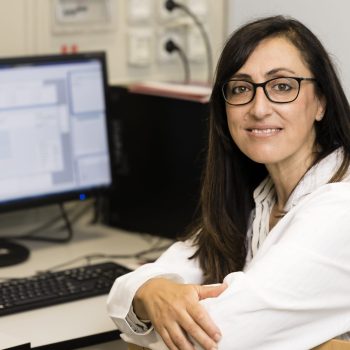
Principal Investigator
Staff
Carlo De Intinis De Intinis
Stefano Carello
Tommaso Montecchi
Valentina Russo
Lara Scarano
Francesca Messora Messora
Francesca Spezio
Research topic
The lab investigates the fundamental mechanisms underlying the development of immune responses, particularly the processes of long-term immunological memory induced by vaccines, or against infections and tumors.
Background
T lymphocytes play a crucial role in the human immune system. They detect infectious bacteria, fungi and viruses and destroy the invaders, importantly they can also attack and fight cancer. A specific subset of immune cells, named memory T cells, is critical for maintaining long-term host-protection to pathogens and cancer. However, during chronic infections and cancer, cytotoxic T cells become exhausted, a dysfunctional condition associated with the failure to generate functional memory. Although the immunological memory is a key hallmark of the immune system, how it is established and maintained in not fully understood. Our long-term goal is to understand the mechanisms of T cell immunological memory and to use this information to develop new therapies for the prevention and treatment of diseases, such as cancer.
Research achievements
The lab aims to understand the lineage relationships among T lymphocyte subsets, as well as to unravel the epigenetics pathways and functional genome regions that regulate the gene expression programs during long-term memory. A key breakthrough by Luigia Pace demonstrated the key role of heterochromatin factor Suv39h1 as a major regulator of memory CD8 T cell differentiation (Pace L., Science 2018), highlighting the importance of epigenetic modifications during terminal CD8+ T effector differentiation.
The team also made significant contributions to the analysis of CD8+ T cells dynamics in vivo, during the initiation of immune responses during pathogen invasion (Pace L, Science 2012, Brasu N., Nature Immunology, 2022) and rejection of solid tumors. The team demonstrated a key role for adenoviral vaccine to promote broadening, expansion, and differentiation of cancer-specific T cells in both translational models and cancer patients (D’Alise A.M., 2022).
Conclusions and perspectives
The research unit is involved in understanding the population dynamics, transcriptional/epigenetic changes and molecular mechanisms during T cell exhaustion and memory. These studies will provide new insights into both the functional identity of T lymphocytes and the mechanisms of epigenetic memory, thus opening new perspectives in lymphocyte manipulation, in the promising field of immunotherapy, and in the development of new vaccines.
Publications
At this link, you can find all the scientific publications of the Principal Investigator.
Selected Publications
Brasu N., Elia I., Russo V., Montacchiesi G., Aversano S.S,. De Intinis C., Fesi F., Gizzi K.,Macagno M., Montone M., Mussolin B., Grifoni A., Faravelli S., Marchese S., Forneris F., De Francesco R., Sette A., Barnaba V., Sottile A., Sapino A., Pace L. NATURE IMMUNOLOLGY 2022. Oct;23(10):1445-1456.
D’Alise A.M., Brasu N., De Intinis C, Leoni G., Russo V., Langone F., Baev D., micarelli E., Petiti L., Picelli S., Fakih M., Le D.T.., Overman M.J., Shields A.F., Pedersen K.S., Shah M.A., Sarbajit M., Faivre T., Delaite P., Scarselli E., Pace L. SCIENCE TRANSLATIONAL MEDICINE, 2022, 10;14(657):eabo7604.
Montacchiesi G., Pace L. IMMUNOL REVIEW. 2022 Jan;305(1):77-89.
Pace L., Goudot C., Zueva E., Quivy JP., G. Almouzni & S. Amigorena. SCIENCE. 2018 Jan 12;359 (6372):177-186.
Pace L., Tempez A., Arnold-Schrauf C., Lemaitre F., Bousso P., Fetler L., Sparwasser T., Amigorena S. Regulatory SCIENCE. 2012 Oct 26; 338 (6106):532-6.