Pathology
Breast cancer, or breast carcinoma, arises from the uncontrolled growth of mammary gland cells. It may form a lump or an area of thickened tissue in the breast or, less frequently, under the axilla.
Breast cancer is the most common malignancy in women and, if not diagnosed and treated in time, can be potentially serious.
Prevention and early detection play a key role: regularly participating in screening programs (such as mammography) and seeking medical attention when there are suspicious symptoms increases the chances of detecting the disease at an early stage, when treatment is most effective.
Types of breast cancer
Breast cancer can occur in several forms, which differ in origin and biological behavior:
- Ductal carcinoma: arises in the cells lining the milk ducts. It is the most frequent form, accounting for about 80% of cases and can extend beyond the ductus;
- Lobular carcinoma: originates in the lobules, the structures deputed to milk production. It accounts for 10-15% of cases and may affect both breasts or develop in multiple locations in the same breast;
- Rare forms: include tubular, papillary, mucinous, and cribriform carcinoma. Although they can give metastases, they generally have a favorable prognosis;
- intraductal carcinoma in situ (DCIS): is a noninvasive form in which cancer cells remain confined to the ducts without spreading to surrounding tissues. If treated promptly, it has a very good chance of recovery.
Knowing the type of tumor is important because it influences treatment choices and prognosis.
The numbers in Italy
In 2024, according to the AIRTUM registry (Italian Association of Cancer Registries), about 53,686 new cases of breast cancer (53,065 women and 621 men) were registered in Italy. It is the most frequently diagnosed cancer in women in Italy (in men it is 100 times rarer).
Symptoms
Breast cancer does not always have obvious symptoms and can be discovered during a routine mammogram or ultrasound. When it occurs, the most common warning signs are:
- Presence of a lump in the breast or underarm;
- Changes in the size, shape, or appearance of the breast;
- Alterations in the shape of the nipple;
- Leakage of fluid from a single nipple;
- Breast skin changes , such as dimples, “orange peel” appearance, flaking or redness around the nipple.
Risk factors
Risk factors for breast cancer can be divided into non-modifiable and modifiable.
Non-modifiable risk factors
- Age: the risk increases with advancing years;
- Family or personal history of breast or ovarian cancer: 5-10% of breast cancers are hereditary in origin, often due to mutations in the BRCA1 and BRCA2 genes, which are responsible for about half of the inherited forms;
- Reproductive factors: early first menstrual cycle (before age 12) or late menopause (after age 55), no pregnancy or first pregnancy over age 30, failure to breastfeed;
- Prior exposure to radiation, such as chest radiotherapy in the past;
- use of some hormonal drugs, such as oral contraceptives or hormone replacement therapies during menopause (although contraceptives reduce the risk of ovarian cancer).
Modifiable risk factors
- Cigarette smoke;
- Overweight and obesity, particularly after menopause;
- diet high in refined fats and sugars and low in fruits and vegetables;
- alcohol consumption.
Diagnosis and examination
La Breast Unit offers immediate intake and a fast and coordinated course of care: less than 15 days elapse from diagnosis to the definition of the treatment plan (surgical and/or oncology-radiotherapy).
For patients who cannot have breast reconstruction during surgery, however, the time for follow-up planning is very short.
The pathway begins at the Division of Radiodiagnostics. Here the tumor is detected through diagnostic imaging examinations and, if necessary, interventional diagnostic procedures.
The collected specimens are then analyzed by the Division of Pathologic Anatomy, which determines their specific characteristics, providing the information needed to plan the most appropriate therapy.
Imaging examinations
Diagnostic imaging tests are used to check for cancerous lesions in the breast, to confirm a suspected cancer diagnosis, and to determine the stage of disease progression.
Mammography
Mammography is an radiography of the breast that uses low doses of ionizing radiation (X-rays) and is performed by the breast medical radiology health technician under the responsibility of the breast radiologist.
The examination is able to show the structure of the breasts and to detect even very small tumor lesions. To perform mammography, the breast is slightly compressed between two plates. Theexamination takes only a few minutes, requires no medication or contrast medium, and no special preparations are needed.
Tomosynthesis or 3D Mammography
Tomosynthesis or 3D Mammography is a mammogram-like device that, through the emission of X-rays, allows us to acquire a three-dimensional image of the breast, breaking it down into a series of images of thin layers that then superimposed reconstruct its volume. It is used to complement traditional mammography for clarify diagnostic doubts. Also for this examination, the breast is slightly compressed between two x-rays, and no medication or contrast medium needs to be administered.
Breast ultrasound
This examination uses ultrasound, emitted by a probe in contact with the skin, which, as they are reflected differently by the various tissues they pass through, show the structure of the breast, allowing us to detect any changes and distinguish solid from liquid ones.
It may be indicated to complement mammography, in the judgment of the Radiologist, especially in women who have dense (or glandular) breasts. The examination poses no risk to the woman, is not painful, and does not require the administration of any medication or contrast medium.
Magnetic Resonance Imaging
Magnetic resonance imaging consists of a cylinder-shaped device that produces a magnetic field and uses radio waves To get very detailed images of the body. It is used as in-depth examination and for high-risk women..
To perform it, a contrast medium to the patient, who is then made to lie prone on a crib that slides inside the cylinder, while the breasts are placed in a cup-shaped holder.
Interventional diagnostics
When an imaging examination shows a suspicious lump or lesion, it is necessary, with a small outpatient procedure, to take a sample of cells or a small part of tissue in order to have a definite diagnosis.
Needle aspiration (cytological sampling)
Needle aspiration consists of taking a few cells from the suspected lesion through a fine needle, which the Radiologist inserts into the lesion under ultrasound guidance, observing the position of the needle in real time on the monitor.
The cells are then analyzed by the Anatomopathologist (cytological examination).
Needle biopsy (histological sampling)
Needle biopsy consists of ptaking a tissue sample of the suspected lesion. To perform it, the radiologist must insert a larger gauge needle into the lesion, so local anesthesia is required.
The tissue fragments taken are then analyzed by the Anatomopathologist (histological examination).
Needle biopsy with Mammotome device
It is a computer-assisted needle biopsy that, thanks to a special aspiration system, allows the radiologist to perform multiple tissue sampling without having to extract the needle with each sampling.
It is performed under the guidance of mammography or MRI images and requires local anesthesia.
Tumor characterization
Cell or tissue samples are analyzed by the anatomo-pathologist, who, using specific methods, confirms whether it is a tumor and identifies the characteristics necessary to make the diagnosis.
Tumor characterization occurs on two levels: morphological-histological and molecular.
Morphologically-histologically, the type of cells from which the tumor originated is determined: cells of the lobules (lobular), responsible for milk production, or cells of the milk ducts (ductal), the channels that transport milk to the nipple. It also determines whether the tumor is noninvasive or invasive based on its ability to spread beyond the site of origin. Invasive tumors, of which ductal tumors are the most common (70-80% of cases), are then classified into Stages I, II, III, and IV according to aggressiveness.
Molecular characterization analyzes, in cancer cells, the presence of specific receptors, proteins that recognize certain molecules and activate processes within the cell. The amount and type of these receptors not only indicate how fast the tumor is growing, but also help in choosing the most appropriate therapy, as some drugs work precisely by blocking these receptors.
In particular, the following are evaluated:
-
hormone receptors, which bind to female hormones (estrogen and progesterone);
-
HER2 receptors, which interact with Human Epidermal growth factor Receptor 2 (HER2).
Also by molecular analysis, theKi67 proliferation index is calculated, which indicates the percentage of tumor cells that can duplicate: the higher the value, the more aggressive the tumor.
Finally, with more advanced genomic testing, a large number of genes are examined for mutations that may have caused the tumor and for which targeted therapies are available. Among the most frequent mutations are those in the BRCA1, BRCA2 and PIK3CA genes.
Therapies
After the diagnosis is confirmed, the multidisciplinary team assesses several factors-type and location of the tumor, possible spread, age, health status, and medical history of the patient-to define an individualized course of treatment.
During an initial consultation, the specialist informs the patient about the diagnosis and the agreed treatment strategy. Therapies can be local (surgery, radiotherapy) or systemic/pharmacological (hormone therapy, chemotherapy, biologic, immunotherapy), even combined. In some cases, neoadjuvant drug therapy is administered before surgery to reduce tumor size.
After the operation, the excised tissue is analyzed by anatomo-pathologists, including molecular analysis. With the final report, the team meets again to plan the next steps. In a second interview, the patient is updated on the final result and subsequent treatment, usually pharmacological and radiation therapy.
For some patients with tumors that are particularly aggressive or resistant to standard therapies, access to experimental therapies within clinical trials. If this option is feasible, it is discussed and shared with the patient.
Surgery
At the time the surgery is scheduled, the surgeon provides the patient with a detailed description of the proposed surgery. The decision is based on several factors including the degree of aggression and theextent of the tumor, the characteristics of the patient and her expectations, the risk of complications. The goal is always to ensure that each patient has the most effective disease control associated with the best cosmetic outcome.
Because the tumor generally spreads through the lymphatic pathways, during surgery the health status of the lymph nodes is checked located in the area of the tumor. For this purpose, the so-called “sentinel lymph node”, the one closest to the tumor nodule; if it is found to be affected by the tumor, the surgeon usually proceeds to remove all other lymph nodes in the axilla.
Depending on the case, the surgery may involve removal of only the tumor and a small part of the breast (quadrantectomy) or complete removal of the breast (mastectomy), with or without preservation of areola and nipple.
To reduce the imperfections caused by the surgery, the plastic surgeon performs the breast reshaping (after quadrantectomy) or its reconstruction (after mastectomy), during or after surgery.
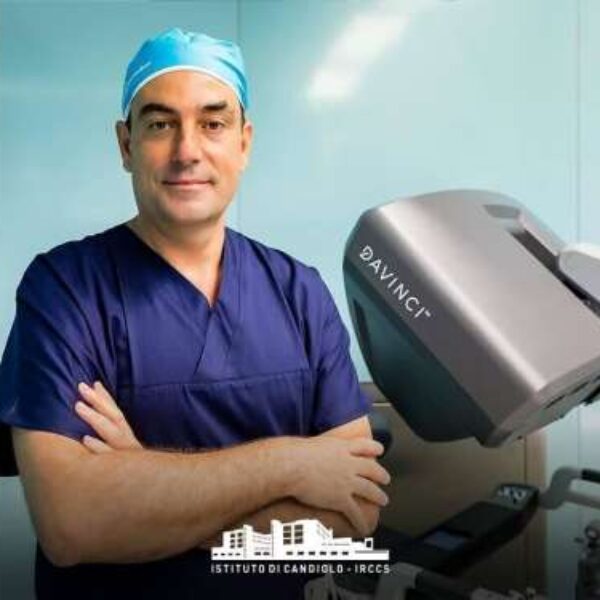
The Candiolo Institute is also theonly cancer center in Italy where mastectomy surgery can be performed via robotic surgery, a technique that precisely spares healthy tissue, including areola and nipple, and minimizes the surgical scar, which is hidden under the armpit.
Breast reconstruction
At the Candiolo Institute, breast reconstruction is an integral part of the course of treatment, as it is of fundamental importance for the physical and psychological rehabilitation of women undergoing breast cancer surgery.
The type of reconstruction depends on the degree of invasiveness of the surgery and can be performed simultaneously with the mastectomy (immediate reconstruction) or at a later time (deferred reconstruction).
La immediate reconstruction in turn can be completed in the same cancer surgery or it can take place in two stages: the placement of an expander during mastectomy and, after a few months, definitive reconstruction.
The following can be used for reconstruction prostheses, thus materials foreign to the body, or the biological tissues of the patient herself (skin, subcutis and/or muscle) or even a combination of both materials. The choice depends on various factors such as the volume and shape of the breast, the extent of surgical excision, the patient’s course of treatment, her medical history, her body appearance, and her preferences.
Reconstruction with silicone implants is the most popular because of its rapidity, reduced invasiveness, and wide range of adaptability to various breast morphologies.
In some cases, it is necessary to place an expander, a temporary silicone device that, when filled with saline, causes the tissues to gradually stretch, allowing them to obtain the surface area necessary to insert the definitive prosthesis after a few months.
To fill small volume deficits, the procedure of lipofilling: fat in the patient’s fat deposits is suctioned through small cannulas and then injected into the breast.
To restore symmetry between the reconstructed and healthy breasts, surgeries are performed on the contralateral breast using breast plastic surgery techniques.
If the breast has been completely removed, the nipple can be reconstructed using small local skin flaps, shaped and sutured to reproduce the shape, or by taking part of the nipple from the opposite healthy breast. Theareola can be recreated with pigmented skin grafts taken from the healthy areola or other areas of the body, or by tattooing to reproduce the natural color.
Radiotherapy
Surgical treatment must be complemented, in most cases, by radiotherapy, which uses high-energy radiation to destroy any residual cancer cells in the mammary gland and reduce the possibility of disease recurrence. After conservative surgery, the following is irradiated the breast tissue alone that has not been removed, whereas after mastectomy generally radiotherapy is not necessary except in special cases.
The radiation therapist, supported by the medical physicist and medical radiology technologist, evaluates the most appropriate treatment for each patient.
Radiation therapy usually begin between 45 and 90 days after surgery, or three to four weeks after the end of chemotherapy, when indicated.
It does not require hospitalization and typically involves 5 sessions per week (Monday through Friday) for up to 15-20 sessions for a total of 3 to 4 weeks. A linear accelerator is used that rotates around the body and is placed at appropriate locations to precisely irradiate the area to be treated. Each session can last 10 to 20 minutes, but the actual irradiation takes only a few minutes.
For patients undergoing conservative surgery at low risk of recurrence, the following is indicated partial postoperative radiotherapy, which involves treatment in 5 sessions for a total of only one week of treatment.
The following are available at the Candiolo Institute state-of-the-art radiotherapy devices that allow treatment to be carried out with extreme precision, in a short time and with mild side effects:
- 3D conformational radiotherapy, that is, patterned on the tumor;
- Intensity-modulated radiotherapy, where the radiation dose is even more precisely distributed around the tumor with greater sparing of healthy organs;
- Image-guided radiotherapy, which allows the patient’s natural movements, such as breathing, to be followed for even more precise irradiation.
In addition, the Candiolo Institute is among the few in Europe to have two pieces of equipment for Tomotherapy, a very high-precision radiotherapy, and a True Beam accelerator, which allows for extremely targeted sessions in reduced time.
Hormone therapy
Hormone therapy involves the administration of drugs that block the activity of estrogen, hormones normally produced by a woman’s body but which in about two out of three patients are responsible for the onset and development of breast cancer.
It is therefore a therapy indicated for so-called hormone-responsive cancers, in which high estrogen and/or progesterone receptors have been found. In these tumors, hormone therapy (also called hormone therapy, or endocrine therapy) works by preventing malignant cells from feeding on female hormones and thus from proliferating under their stimulus.
Hormone therapy, which in most cases is taken orally, it can be used to reduce the size of the tumor before surgery (neoadjuvant therapy) or, more often, after surgery and any chemotherapy and/or radiation therapy, to prevent recurrence of the disease (adjuvant therapy). In this case, therapy should be administered for at least 5 years.
Hormone therapy includes. three categories of drugs:
- anti-estrogeni, of which Tamoxifen is the most widely used drug: they prevent hormones from binding to cancer cells and are often indicated for patients who have not yet gone through menopause. Tamoxifen is one tablet to be taken once daily for at least 5 years, up to a maximum of 10 years;
- aromatase inhibitors (Letrozole, Anastrozole, Exemestane): they block estrogen production that occurs by the aromatase enzyme; they are usually indicated for menopausal women but in some cases also premenopausal women. Again, this is one tablet to be taken once a day for at least 5 years;
- LHRH analogs (Triptorelin, Leuprorelin, Goserelin): are drugs that can induce an artificial menopause and are prescribed to premenopausal women In combination with anti-estrogens or aromatase inhibitors. These are injections to be given once a month or every 3 months.
Chemotherapy
The term chemotherapy refers to the drugs that eliminate cancer cells Taking advantage of their faster reproduction rate than healthy ones. Because it interferes with the replication mechanisms of cells, chemotherapy also damages the body’s healthy cells causing major side effects that fortunately disappear once the treatment is over.
Chemotherapy is generally indicated in cases where there is a’high probability that the tumor has spread in the body to sites other than the breast (metastasis) or that it may recur over time (recurrence).
It can be used to reduce tumor volume before surgery (neoadjuvant chemotherapy), to reduce the risk of recurrence after surgery and radiotherapy (adjuvant chemotherapy) or to slow down the progression of the disease when it is in an advanced stage.
In most cases, chemotherapy is administered by intravenous injection, less frequently orally. The duration of each administration, which is performed on an outpatient basis, can vary from minutes to hours depending on the drugs used.
In fact, there are many chemotherapy drugs, which are often used in combination.
The therapy is carried out in cycles: each cycle lasts for a few days and is followed by a few weeks of rest. The number of cycles depends on the type of tumor and, of course, the response to the drugs, which can vary greatly from patient to patient.
Biological therapies
Biological therapies, also called molecular targeted therapies or target therapies, are targeted therapies, that is, their action is specific only to the molecular target (receptor, growth factor, enzyme) against which they are directed. These targets, found primarily in cancer cells, are responsible for the uncontrolled growth and spread of cells, their resistance to traditional therapies, and the production of new blood vessels.
One of the targets of biological therapies is the HER2 protein (the receptor that on the cancer cell binds to epidermal growth factor). Against it, the drug Trastuzumab acts by blocking its function in stimulating tumor proliferation. This is a therapy indicated only for cancers characterized by high HER2, either early-stage or advanced. It is administered intravenously or subcutaneously 1 to 3 times a week for 1 year, initially in combination with chemotherapy.
The drug Pertuzumab also targets the HER2 protein: it is administered intravenously every 3 weeks in combination with Trastuzumab and chemotherapy in cases of advanced cancer and, in patients at high risk of recurrence, before surgery.
Another goal of biological therapies is to prevent the formation of new blood vessels (angiogenesis), by which the tumor grows and spreads. The drug Bevacizumab acts against the vascular growth factor VEGF and is used in combination with chemotherapy in cases of metastatic cancer. It is administered intravenously every 2 to 3 weeks.
Other biological drugs target the CDK4/6 cyclins, two enzymes that, when made overactive, allow cancer cells to grow and divide very rapidly. So-called cyclin inhibitor drugs, by blocking CDK4/6, hinder uncontrolled tumor growth. These drugs, indicated for advanced or metastatic hormone-responsive cancers in combination with hormone therapy, increase its efficacy and slow disease progression
Immunotherapy
Immunotherapy drugs are intended to enhance or reactivate the immune system’s ability to recognize and attack external agents such as a tumor.
Although oncology research has been very active on this front for years, for breast cancer to date only the drug Atezolizumab has been approved: its target are the so-called immune checkpoints, molecules present on the surface of T lymphocytes (cells of the immune system) that are capable of blocking the body’s defense activity. By hindering the activity of these molecules, the drug takes the brakes off the immune response, allowing it to detect and attack the tumor.
The drug is indicated in particular cases of triple-negative cancer (i.e., neither hormone-responsive nor HER2-positive) advanced or metastatic. It is administered intravenously in combination with chemotherapy
Ongoing support
At our institute, we ensure constant support before, during and after treatment to accompany each patient throughout the entire course of treatment and recovery.
Management of side effects
All breast cancer treatments involve side effects that impact quality of life more or less severely. However, they can be mitigated and in some cases prevented by specific treatments and/or appropriate lifestyle.
In the Breast Unit of the Candiolo Institute, the doctors and nurses of the multidisciplinary team are available to provide the patient with all the support she needs to manage the various side effects she will face in the course of treatment.
Among them:
- Lymphedema: a side effect of surgical removal of armpit lymph nodes, it is a stagnation of lymph fluids that causes swelling of the arm and/or hand: a physical therapist provides specific treatment to patients who need it;
- osteoporosis: to help prevent this side effect of hormone therapy, a physiatrist is available to patients, and the oncologist can assess whether to administer specific medications;
- sexual dysfunction (vaginal dryness, flushing, decreased libido) the oncologist and gynecologist may recommend local therapies to reduce these side effects of hormone therapy;
- Infertility: chemotherapy and hormone therapy can impair the reproductive capacity of women of childbearing age. Young patients are then informed of this risk at the time of diagnosis and receive specific counseling on available fertility preservation strategies;
- nausea, vomiting, altered taste: a nutritionist provides guidance to the patient on how to reduce these side effects of chemotherapy;
- Cardiotoxicity: cardiac damage caused by chemotherapy is treated at the cardiology division, and the risk of cardiotoxicity is assessed before starting treatment.
Psychological support
If needed, qualified psychological support is offered to the patient and her family members at all stages of her illness, starting from the time of initial diagnosis.
Such support helps the woman:
-
- to reorganize their lives without allowing the disease to invade them more than necessary;
-
- To accept changes in one’s image and learn to live with them peacefully;
-
- To communicate with their family members, especially their young children.
In addition to one-on-one interviews with the psycho-oncologist, it is possible to participate in psychological support groups that provide an opportunity to engage with others who have gone through or are going through the same experience.
Genetic counseling
The Breast Unit at the Candiolo Institute has an outpatient genetic counsel ing clinic where a geneticist, an expert in hereditary-familial breast and ovarian cancers, offers patients in need counseling for cancer risk assessmentand genetic testing.
The Breast Unit also offers a surveillance program and personalized follow-up for women at high genetic risk.
Direct line to specialists
To ensure timely and direct support and receive prompt answers to concerns and questions, a dedicated helpline is in place at the Candiolo Institute for all patients.
Monday through Friday, from 8 a.m. to 5 p.m., you can contact the secretariat of the Oncology Day Hospital at 011.993.3775, reporting the need for urgent consultation.
The patient will be quickly put in touch with their medical specialist for clear answers and immediate support.
Continuing and palliative care
The cancer patient is a person with complex needs who requires multidisciplinary support not only for the cancer disease but also for all related issues.
At the Candiolo Institute, patients who need or request it can access specialists in different areas to receive nutritional support, physical therapy, pain therapy, and management of other associated conditions.
Social work
The Social Service Department of the Candiolo Institute conducts information and orientation interviews to patients and their families on how to access services in the area and how to obtain welfare and social security benefits provided by law (disability, benefits for aids and prostheses, work leave, etc.).
The service operates on Wednesdays and Fridays from 9 a.m. to 1 p.m. (phone: 011 9933059).
Follow up
With the conclusion of the course of treatment, the follow-up period begins during which, through a series of examinations and visits, the side effects of the therapies performed and their effectiveness are monitored and the patient’s recovery is assessed.
Follow-up visits are especially important to intercept any recurrences early, so that appropriate therapy can be intervened. For the woman, they are also a valuable opportunity for dialogue with her medical specialist.
It is the Breast Unit oncologist himself who schedules follow-up visits, in which the patient’s health condition is assessed and reports of any required tests are viewed. Visits are made on a scheduled basis for the duration of 5-10 years.
The breast cancer follow-up program generally involves:
-
- A clinical visit every 3-6 months for the first 5 years, then once a year,
-
- An annual mammogram, with any completion examinations as judged by the radiologist.
If recurrence is suspected, at any time the general practitioner or specialist may prescribe investigative examinations (chest X-ray, ultrasound of the abdomen, bone scintigraphy, CT scan, PET blood test, and tumor markers).
Interdisciplinary Group
Every cancer requires, in all phases of disease management, a multidisciplinary approach that at the Candiolo Institute is guaranteed by a team of different specialists, belonging to the various clinical and surgical departments of the Institute: this team is called GIC (Interdisciplinary Care Group). The GIC ensures that each patient is taken care of throughout the diagnostic-therapeutic process, including prescribing and booking examinations and communicating with the patient and his or her family members. The GIC defines and shares a personalized care pathway for each patient, based not only on the type and stage of the tumor, but also on the patient’s own characteristics. The goal is to ensure that he or she has the best outcome both oncologically and functionally and the maintenance of a good quality of life.The Group also works closely with researchers at the Institute to ensure that patients have rapid access to the latest research-produced innovations in screening, diagnosis and treatment.
Clinical divisions
The diagnostic-therapeutic pathway for breast cancers at Candiolo involves several clinical divisions, including:
- Breast Surgery
- Breast Unit
- Gynecology Oncology and Hereditary Tumors
- Medical Oncology
- Anesthesia and resuscitation
- Reconstructive Plastic Surgery
- Nuclear medicine
- Radiotherapy
- Radiodiagnostics
- Pathologic anatomy
Clinical studies
Researchers at the Candiolo Institute are currently involved in several national and international projects on breast cancer.
One of the goals pursued is to make the diagnosis of different types of breast cancer increasingly accurate: to this end, new molecular markers are being studied with state-of-the-art experimental methods using cells derived from tumor tissue donated by the patients themselves. Various types of tests are performed on these cells, including analysis of molecules involved in tumor growth, particularly the HER2 protein.
Another goal is to improve personalization of care for patients with hormone-responsive cancers. For them, a clinical trial involving treatment with hormone therapy before surgery, after preoperative biopsy, is underway to assess how well the therapy is actually able to block tumor proliferation. Patients are also offered the opportunity to assess the molecular subtype of the tumor through advanced technologies.
Why choose us
Clinical experience and tailored approach
Due to the high number of cases treated each year, the Candiolo Institute is a national reference for taking care of esophageal cancer. Our experience enables us to deal with even the most complex situations, always with a personalized approach built on the clinical and personal profile of each patient.
Imaging technologies and advanced diagnostics
Establishing the treatment plan always starts with an accurate and timely diagnosis. Patients have access to state-of-the-art imaging technologies that allow accurate assessment of the extent of the disease.
In addition, the Institute offers advanced and sophisticated laboratory investigations, including molecular and genomic analyses, which are critical for identifying biological features of cancer and guiding therapeutic decisions.
Minimally invasive surgical techniques and multidisciplinarity
When indicated, surgery is performed with minimally invasive techniques (laparoscopic or thoracoscopic), which reduce operative trauma, promote faster recovery, and improve postoperative quality of life. Every treatment choice is defined within the GIC, ensuring a consistent and integrated approach.
Clinical research and access to trials
As an IRCCS, the Candiolo Institute combines clinical practice with a strong vocation for scientific research. Patients can be evaluated for inclusion in active clinical trials, which represent a real chance to access innovative therapies not yet available in standard practice. Collaboration between care and research is a distinctive value that translates into concrete opportunities for the patient.
Care and support every step of the way
The Interdisciplinary Care Group takes care of the person at every stage: from diagnosis to treatment to follow-up, with attention to nutritional support, psychological health, and reintegration into daily life. The organization of checkups, visits and treatment is designed to ensure continuity and serenity, always valuing the human dimension of care.