Pathology
Breast cancer, also known as breast carcinoma, arises from the uncontrolled proliferation of cells within the mammary gland. It may present as a palpable lump or as an area of tissue thickening in the breast, and less frequently in the axillary region.
Breast cancer is the most common malignancy in women and, if not diagnosed and treated promptly, can be potentially serious. Prevention and early detection are essential: regular participation in screening programs (such as mammography) and prompt medical evaluation of suspicious symptoms significantly increase the likelihood of identifying the disease at an early stage, when treatment is most effective.
Types of Breast Cancer
BreasBreast cancer can present in different forms, which vary according to their origin and biological behavior:
- Ductal carcinoma: arises from the epithelial cells lining the milk ducts. It is the most common form (~80% of cases) and may extend beyond the ductal structures.
- Lobular carcinoma: originates in the lobules, the structures responsible for milk production. It represents 10–15% of cases and may involve both breasts or appear in multiple areas of the same breast.
- Rare histological types: include tubular, papillary, mucinous, and cribriform carcinomas. Although these forms may metastasize, they are generally associated with a more favorable prognosis.
- Ductal carcinoma in situ (DCIS): a non-invasive form in which malignant cells remain confined within the ducts without invading surrounding tissues. When treated promptly, it has an excellent prognosis.
Accurate tumor classification is essential, as it directly influences both treatment planning and prognosis.
The Numbers in Italy
According to the AIRTUM registry (Italian Association of Cancer Registries), in 2024 approximately 53,686 new cases of breast cancer were diagnosed in Italy (53,065 in women and 621 in men). It is the most frequently diagnosed cancer in women, while in men it is significantly rarer.
Symptoms
Breast cancer does not always present with obvious symptoms and is often detected during routine mammography or ultrasound screening. When present, common warning signs include:
- Presence of a lump in the breast or axillary region
- Changes in breast size, shape, or appearance
- Alterations in nipple shape or position
- Unilateral nipple discharge
- Skin changes such as dimpling, “orange peel” texture, scaling, or redness
Risk Factors
Risk factors for breast cancer are divided into non-modifiable and modifiable factors.
Non-Modifiable Risk Factors
- Age: risk increases with advancing age
- Family or personal history:5–10% of cases are hereditary, often associated with mutations in the BRCA1 and BRCA2 genes
- Reproductive factors: early menarche (before age 12), late menopause (after age 55), nulliparity, or first pregnancy after age 30
- Previous radiation exposure: such as prior chest radiotherapy
- Hormonal treatments: including oral contraceptives or menopausal hormone replacement therapy (although oral contraceptives are associated with a reduced risk of ovarian cancer)
Modifiable Risk Factors
- Smoking
- Overweight and obesity, particularly after menopause
- Diet high in refined fats and sugars and low in fruit and vegetables
- Alcohol consumption.
Diagnosis and Clinical Pathway
The Breast Unit at the Candiolo Cancer Institute offers rapid access and a coordinated diagnostic and therapeutic pathway: less than 15 days elapse between diagnosis and the definition of the treatment plan (surgical and/or oncological-radiotherapy approach). In patients not eligible for immediate breast reconstruction during surgery, follow-up planning is similarly rapid.
The diagnostic pathway begins at the Radiologdiagnostics Service, where lesions are identified through imaging techniques and, when necessary, interventional diagnostic procedures. Tissue samples are then analyzed by the Pathology Unit, which defines the biological and molecular characteristics required for treatment planning.
Imaging Techniques
Imaging examinations are used to detect breast lesions, confirm suspected malignancy, and assess disease extent.
Mammography
Mammography is a radiographic examination of the breast that uses low doses of ionizing radiation (X-rays). It is performed by a breast radiology technician, under the supervision and responsibility of the breast radiologist.
Tomosynthesis or 3D Mammography
Tomosynthesis, or 3D mammography, is a mammography-based imaging technique that uses low-dose X-rays to acquire a three-dimensional reconstruction of the breast. The breast is imaged as a series of thin slices, which are then reconstructed and combined to form a volumetric representation.
It is used as a complement to conventional mammography to help clarify diagnostic uncertainties and improve lesion detection, particularly in dense breast tissue.
During the examination, the breast is lightly compressed between two plates, similar to standard mammography. The procedure requires no medication or contrast medium and does not require any special preparation.
Breast Ultrasound
This examination uses ultrasound waves, emitted by a probe in direct contact with the skin. As the waves are reflected differently by the various tissues they encounter, they allow visualization of the breast structure, enabling the detection of abnormalities and the differentiation between solid and fluid-filled lesions.
Breast ultrasound may be performed as a complement to mammography, at the discretion of the radiologist, particularly in women with dense (glandular) breast tissue, where mammographic interpretation may be more limited.
The examination is safe, painless, and non-invasive, and does not involve the use of ionizing radiation. It also does not require the administration of any medication or contrast medium.
Magnetic Resonance Imaging (MRI)
Magnetic resonance imaging (MRI) is performed using a cylinder-shaped device that generates a strong magnetic field and uses radio waves to produce highly detailed images of the body.
It is used as an advanced diagnostic examination and is particularly indicated for high-risk patients and for further diagnostic evaluation when needed.
For the examination, a contrast medium is administered intravenously. The patient lies prone on a table that slides into the scanner, while the breasts are positioned within a dedicated coil-shaped support to optimize image acquisition.
Interventional Diagnostics
When imaging reveals a suspicious lesion, a minimally invasive procedure is performed to obtain cells or tissue for definitive diagnosis.
Needle Aspiration (Cytological Sampling)
Needle aspiration consists of collecting a small number of cells from a suspected lesion using a fine needle, which the radiologist inserts into the lesion under ultrasound guidance, while continuously monitoring the needle position on a screen in real time.
The collected cells are then examined by the anatomopathologist through a cytological analysis.
Needle Biopsy (Histological Sampling)
Needle biopsy consists of collecting a tissue sample from a suspected lesion. The radiologist uses a larger-gauge needle, which is inserted into the lesion to obtain small fragments of tissue; therefore, local anesthesia is required.
The collected tissue is then examined by the anatomopathologist through a histological analysis.
Needle Biopsy with Mammotome Device
This is a computer-assisted vacuum-assisted needle biopsy that uses a specialized aspiration system, allowing the radiologist to obtain multiple tissue samples without the need to remove and reinsert the needle for each collection.
The procedure is performed under the guidance of mammography or MRI imaging and requires the administration of local anesthesia.
Tumor Characterization
Cellular or tissue samples are analyzed by the anatomopathologist, who, using specialized methods, confirms the presence of a tumor and identifies the key features required for diagnosis.
Tumor characterization occurs on two main levels: morphological-histological and molecular.
Morphological-Histological Characterization
This analysis determines the cell type of origin of the tumor, distinguishing between:
- Lobular carcinoma, originating from the lobules responsible for milk production;
- Ductal carcinoma, originating from the milk ducts that transport milk to the nipple.
It also establishes whether the tumor is non-invasive (in situ) or invasive, based on its ability to extend beyond the site of origin. Invasive tumors—of which ductal carcinomas are the most common (70–80% of cases)—are then classified into Stage I, II, III, or IV, according to disease extent and aggressiveness.
Molecular Characterization
Molecular analysis evaluates the presence of specific cellular receptors and proteins that regulate tumor behavior and growth. The type and expression levels of these receptors provide information on tumor aggressiveness and guide treatment selection, as several therapies act by targeting these molecular pathways.
In particular, the following are assessed:
- Hormone receptors (estrogen and progesterone receptors), which bind female hormones;
- HER2 receptors (Human Epidermal Growth Factor Receptor 2), involved in cell growth signaling.
In addition, the Ki-67 proliferation index is measured, indicating the percentage of tumor cells actively dividing; higher values are associated with more aggressive disease.
Finally, advanced genomic profiling may identify mutations across multiple genes that contributed to tumor development and may be actionable with targeted therapies. Among the most frequently assessed mutations are those in the BRCA1, BRCA2, and PIK3CA genes.
Therapy
After diagnostic confirmation, a multidisciplinary team evaluates tumor type, location, stage, patient age, clinical condition, and medical history in order to define an individualized treatment plan.
During the first consultation, the patient is informed of the diagnosis and the proposed therapeutic strategy. Treatment options may include local therapies (surgery and radiotherapy) and systemic therapies (chemotherapy, hormone therapy, targeted therapy, and immunotherapy), which can be used alone or in combination. In selected cases, neoadjuvant therapy may be administered before surgery to reduce tumor size.
After surgery, the resected tissue undergoes pathological and molecular analysis. The multidisciplinary team then reconvenes to define the subsequent therapeutic steps. The patient is subsequently informed of the final results and of the recommended adjuvant treatment plan, which may include pharmacological therapy and/or radiotherapy.
For patients with particularly aggressive or treatment-resistant tumors, participation in clinical trials evaluating experimental therapies may be considered and discussed within the multidisciplinary team and with the patient.
Surgery
At the time surgery is scheduled, the surgeon provides the patient with a detailed explanation of the proposed procedure. The surgical decision is based on several factors, including the tumor’s degree of aggressiveness and extent, the patient’s clinical characteristics and expectations, and the risk of complications. The objective is always to ensure optimal oncological control while achieving the best possible aesthetic and functional outcome.
Because breast cancer typically spreads through the lymphatic system, intraoperative assessment of axillary lymph node status is performed. This is done through the identification of the sentinel lymph node, which is the lymph node closest to the tumor. If the sentinel lymph node is found to be involved, the surgeon may proceed with removal of the remaining axillary lymph nodes.
Depending on the clinical situation, surgery may consist of a breast-conserving procedure (quadrantectomy), involving removal of the tumor with a margin of healthy tissue, or a mastectomy, involving complete removal of the breast, with or without preservation of the nipple-areola complex.
To minimize postoperative deformities, onco-plastic breast reshaping is performed after quadrantectomy, or breast reconstruction is carried out after mastectomy, either during the same procedure or at a later stage.
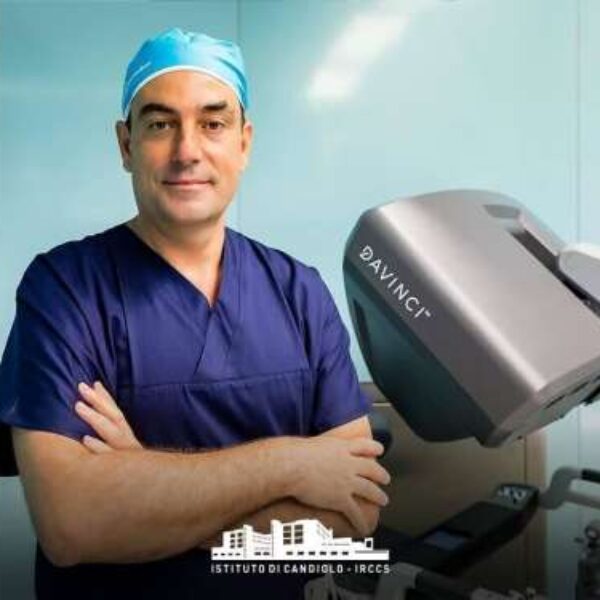
The Candiolo Cancer Institute is also the only cancer center in Italy where mastectomy can be performed using a robotic surgical approach. This technique allows for precise tissue preservation, including in selected cases the nipple-areola complex, and results in a smaller, less visible scar, typically concealed in the axillary region.
Breast Reconstruction
At the Candiolo Cancer Institute, breast reconstruction is an integral part of the treatment pathway, as it plays a key role in both the physical and psychological rehabilitation of women undergoing surgery for breast cancer.
The type of reconstruction depends on the extent of the surgical procedure and may be performed either at the same time as the mastectomy (immediate reconstruction) or at a later stage (delayed reconstruction).
Immediate reconstruction may be completed during the same surgical procedure or carried out in two stages: first, the placement of a tissue expander at the time of mastectomy, followed—after several months—by definitive reconstruction.
Reconstruction can be performed using prosthetic materials, autologous tissues (such as skin, subcutaneous tissue, and/or muscle), or a combination of both techniques. The choice depends on multiple factors, including breast volume and shape, the extent of tissue removal, ongoing oncological treatments, medical history, body characteristics, and patient preferences.
Reconstruction with silicone implants is the most commonly used approach due to its rapidity, lower invasiveness, and adaptability to different breast morphologies.
In selected cases, a tissue expander is used: a temporary silicone device that is gradually filled with saline to progressively stretch the tissues, creating sufficient space for the definitive implant.
For the correction of small volume defects, lipofilling may be performed, which involves harvesting fat from the patient’s own body through liposuction and reinjecting it into the breast.
To achieve optimal symmetry, procedures may also be performed on the contralateral healthy breast using oncoplastic techniques.
When the breast has been completely removed, nipple reconstruction can be performed using local skin flaps shaped to recreate the nipple, or by partial grafting from the contralateral nipple. The areola may be reconstructed using pigmented skin grafts from the opposite areola or other body sites, or through medical tattooing to restore natural coloration.
Radiotherapy
Surgical treatment is, in most cases, complemented by radiotherapy, which uses high-energy radiation to eliminate any residual cancer cells in the breast tissue and reduce the risk of disease recurrence. After breast-conserving surgery, only the remaining breast tissue is irradiated. Following a mastectomy, radiotherapy is generally not required, except in selected cases.
The radiation oncologist, in collaboration with the medical physicist and the radiation therapy technician, defines the most appropriate treatment plan for each patient.
Radiotherapy is usually initiated between 45 and 90 days after surgery, or approximately 3 to 4 weeks after the completion of chemotherapy, when indicated.
Treatment is performed on an outpatient basis and typically involves 5 sessions per week (Monday to Friday) for a total of 15–20 sessions, over approximately 3 to 4 weeks. A linear accelerator is used, which rotates around the patient to deliver radiation precisely to the target area. Each session lasts about 10 to 20 minutes, although the actual radiation delivery takes only a few minutes.
In selected low-risk patients undergoing breast-conserving surgery, partial breast irradiation may be indicated. This approach consists of 5 treatment sessions over approximately one week.
At the Candiolo Cancer Institute, state-of-the-art radiotherapy technologies are available, allowing highly precise treatment delivery with reduced toxicity and shorter treatment times:
- 3D conformal radiotherapy, shaped according to the tumor site;
- Intensity-modulated radiotherapy (IMRT), which allows highly precise dose distribution while sparing surrounding healthy tissues;
- Image-guided radiotherapy (IGRT), which tracks patient and organ movement (such as breathing) to improve treatment accuracy.
In addition, the Candiolo Cancer Institute is among the few centers in Europe equipped with two Tomotherapy systems, enabling highly precise helical radiotherapy, as well as a TrueBeam linear accelerator, which allows highly targeted treatments with reduced session times.
Hormone Therapy
Chemotherapy
The term chemotherapy refers to the drugs that eliminate cancer cells Taking advantage of their faster reproduction rate than healthy ones. Because it interferes with the replication mechanisms of cells, chemotherapy also damages the body’s healthy cells causing major side effects that fortunately disappear once the treatment is over.
Chemotherapy is generally indicated in cases where there is a’high probability that the tumor has spread in the body to sites other than the breast (metastasis) or that it may recur over time (recurrence).
It can be used to reduce tumor volume before surgery (neoadjuvant chemotherapy), to reduce the risk of recurrence after surgery and radiotherapy (adjuvant chemotherapy) or to slow down the progression of the disease when it is in an advanced stage.
In most cases, chemotherapy is administered by intravenous injection, less frequently orally. The duration of each administration, which is performed on an outpatient basis, can vary from minutes to hours depending on the drugs used.
In fact, there are many chemotherapy drugs, which are often used in combination.
The therapy is carried out in cycles: each cycle lasts for a few days and is followed by a few weeks of rest. The number of cycles depends on the type of tumor and, of course, the response to the drugs, which can vary greatly from patient to patient.
Biological Therapies
Biological therapies, also known as molecularly targeted therapies or targeted therapies, are treatments designed to act specifically on defined molecular targets such as receptors, growth factors, or enzymes. These targets, predominantly found in cancer cells, play a key role in uncontrolled cell growth, tumor spread, resistance to conventional therapies, and angiogenesis.
One of the main targets of biological therapies is the HER2 protein (the receptor that binds epidermal growth factor on cancer cells). The drug Trastuzumab acts by blocking HER2 function, thereby inhibiting tumor proliferation. This therapy is indicated only for HER2-positive breast cancers, in both early and advanced stages. It is administered intravenously or subcutaneously, typically every 1 to 3 weeks for up to 1 year, often in combination with chemotherapy.
Another anti-HER2 agent is Pertuzumab, which also targets the HER2 receptor. It is administered intravenously every 3 weeks, in combination with Trastuzumab and chemotherapy in advanced disease, and may also be used in patients at high risk of recurrence before surgery.
A further therapeutic target is angiogenesis, the process through which tumors form new blood vessels to grow and spread. The drug Bevacizumab inhibits the vascular endothelial growth factor (VEGF) and is used in combination with chemotherapy in metastatic disease. It is administered intravenously every 2 to 3 weeks.
Other biological agents target the CDK4/6 cyclins, enzymes that regulate cell cycle progression. When overactivated, they promote rapid tumor growth and division. CDK4/6 inhibitors, used in combination with hormone therapy in advanced or metastatic hormone receptor–positive breast cancer, enhance treatment efficacy and help slow disease progression.
Immunotherapy
Immunotherapy drugs are designed to enhance or restore the immune system’s ability to recognize and attack abnormal cells, including tumor cells.
Although oncological research in this field has been highly active for several years, in breast cancer only Atezolizumab is currently approved. Its target is the so-called immune checkpoints, molecules located on the surface of T lymphocytes (cells of the immune system) that can inhibit immune responses. By blocking these checkpoints, the drug effectively removes the “brakes” on the immune system, enabling it to recognize and attack tumor cells.
Atezolizumab is indicated in selected cases of triple-negative breast cancer (i.e., tumors that are neither hormone receptor–positive nor HER2-positive), particularly in advanced or metastatic disease. It is administered intravenously in combination with chemotherapy.
Ongoing Support
At the Candiolo Cancer Institute, patients receive continuous support before, during, and after treatment.
Our multidisciplinary teams accompany each patient throughout the entire diagnostic, therapeutic, and recovery pathway, providing personalized care and support at every stage.
Side Effects of Breast Cancer Treatments
All breast cancer treatments may be associated with side effects that can affect quality of life to varying degrees. However, many of these effects can be mitigated and in some cases prevented through appropriate supportive treatments and lifestyle measures.
At the Breast Unit of the Candiolo Cancer Institute, physicians and nurses within the multidisciplinary team provide comprehensive support to help patients manage treatment-related side effects throughout the entire care pathway.
Common side effects include:
- Lymphedema: a possible consequence of axillary lymph node removal, characterized by lymph fluid accumulation leading to swelling of the arm and/or hand. A physiotherapist provides specific rehabilitation and management strategies when needed.
- Osteoporosis: associated particularly with hormone therapy. A physiatrist is available for prevention and management, and the oncologist may prescribe specific protective medications when indicated.
- Sexual dysfunction: including vaginal dryness, hot flashes, and reduced libido. The oncologist and gynecologist may recommend local treatments to alleviate these symptoms, often related to hormone therapy.
- Infertility: chemotherapy and hormone therapy may impair reproductive function in women of childbearing age. Patients are informed of this risk at diagnosis and receive dedicated fertility preservation counseling.
- Nausea, vomiting, and taste alterations: mainly associated with chemotherapy. A nutritionist provides dietary guidance to help reduce these symptoms.
- Cardiotoxicity: potential cardiac effects of certain chemotherapy agents. Cardiac function is assessed before treatment initiation, and any treatment-related cardiac issues are managed in collaboration with the Cardiology Division.
Psychological Support
When needed, qualified psychological support is offered to patients and their family members at all stages of the disease, starting from the time of initial diagnosis.
This support helps patients:
- reorganize their lives without allowing the disease to dominate their daily experience
- accept changes in body image and learn to adapt to them
- communicate more effectively with family members, especially young children
In addition to individual consultations with a psycho-oncologist, patients may also participate in psychological support groups, which provide an opportunity to share experiences with others who are facing or have faced a similar journey.
Genetic Counseling
The Breast Unit at the Candiolo Cancer Institute includes an outpatient genetic counseling clinic, where a geneticist specialized in hereditary and familial breast and ovarian cancers provides counseling for cancer risk assessment and, when indicated, genetic testing.
The Breast Unit also offers a structured surveillance program and personalized follow-up for women identified as having a high genetic risk.
Direct line to Direct Line to Specialists
Continuing and Palliative Care
The cancer patient is a person with complex needs who requires multidisciplinary support, not only for the cancer disease itself but also for all related clinical and supportive issues.
At the Candiolo Cancer Institute, patients who require or request it can access specialists from different areas to receive nutritional support, physiotherapy, pain management, and treatment of other associated conditions.
Social Work Service
The Social Service Department of the Candiolo Cancer Institute provides information and orientation interviews for patients and their families on how to access local services and obtain welfare and social security benefits provided by law, including disability support, assistance for aids and prostheses, and work leave provisions.
The service is available on Wednesdays and Fridays, from 9:00 a.m. to 1:00 p.m., and can be contacted at +39 011 993 3059.
Follow-up
With the conclusion of the treatment course, the follow-up period begins. During this phase, a series of clinical examinations and medical visits are performed to monitor the effectiveness of therapies, assess possible side effects, and evaluate the patient’s recovery.
Follow-up visits are particularly important for the early detection of any disease recurrence, allowing timely intervention when necessary. For patients, they also represent an important opportunity for dialogue with their specialist physician.
Follow-up appointments are scheduled by the Breast Unit oncologist, who evaluates the patient’s clinical condition and reviews the results of any required tests. These visits are planned on a regular basis and generally continue for 5 to 10 years.
The breast cancer follow-up program typically includes:
- A clinical visit every 3 to 6 months for the first 5 years, then once a year thereafter;
- An annual mammogram, with additional imaging studies when considered necessary by the radiologist.
If recurrence is suspected at any time, the general practitioner or specialist may prescribe further diagnostic investigations, including chest X-ray, abdominal ultrasound, bone scintigraphy, CT scan, PET scan, and tumor markers.
Multi Disciplinary Team
Every cancer requires a multidisciplinary approach at all stages of disease management. At the Candiolo Cancer Institute, this is provided by a team of specialists from various clinical and surgical departments, known as the GIC, Interdisciplinary Care Group (or MDT). The GIC ensures that each patient is supported throughout the diagnostic and therapeutic process, including arranging and coordinating examinations and maintaining communication with the patient and their family.
For each patient, the GIC (MDT) defines and shares a personalized care pathway based not only on the type and stage of the tumor but also on the patient’s individual characteristics. The goal is to achieve the best possible outcomes both oncologically and functionally, while maintaining a high quality of life.
The Group also collaborates closely with the Institute’s researchers to provide patients with rapid access to the latest innovations in screening, diagnosis, and treatment.
Clinical Divisions
The diagnostic and therapeutic pathway for breast cancer at the Candiolo Cancer Institute involves several clinical divisions, ensuring an integrated and multidisciplinary approach throughout all phases of diagnosis, treatment, and follow-up.
- Breast Surgery
- Breast Unit
- Gynecology Oncology and Hereditary Tumors
- Medical Oncology
- Anesthesia and Resuscitation
- Reconstructive Plastic Surgery
- Nuclear Medicine
- Radiotherapy
- Radiodiagnostics
- Anatomical Pathology
Clinical Studies
Researchers at the Candiolo Cancer Institute are currently involved in several national and international projects focused on breast cancer.
One of the main objectives is to improve the accuracy of breast cancer diagnosis. To this end, new molecular markers are being investigated using state-of-the-art experimental methods on cells derived from tumor tissue donated by patients. These cells undergo various analyses, including the study of molecules involved in tumor growth, particularly the HER2 protein.
Another key objective is to enhance the personalization of treatment for patients with hormone receptor–positive breast cancer. In this context, a clinical trial is ongoing in which patients receive hormone therapy before surgery, following preoperative biopsy, in order to evaluate the ability of treatment to effectively inhibit tumor proliferation. Patients are also offered the opportunity to assess the molecular subtype of the tumor through advanced technologies.
Why Choose Us
Clinical Experience and Tailored Approach
Thanks to the large number of liver cancer cases treated each year, the Candiolo Cancer Institute is a national reference center for the care of this disease. This extensive experience allows us to manage even the most complex cases, always using a personalized approach, tailored to the clinical and individual profile of each patient.
Imaging Technologies and Advanced Diagnostics
Establishing the treatment plan always begins with an accurate and timely diagnosis. Patients have access to state-of-the-art imaging technologies, which allow a precise assessment of disease extent.
In addition, the Candiolo Cancer Institute offers advanced and highly specialized laboratory investigations, including molecular and genomic analyses, which are essential for identifying the biological characteristics of the tumor and guiding therapeutic decisions.
Minimally Invasive Surgical Techniques and Multidisciplinarity
When appropriate, liver surgeries are performed using minimally invasive, laparoscopic or robotic techniques. These approaches involve the use of camera-equipped instruments introduced into the abdomen through small incisions, thus reducing surgical trauma. Benefits to the patient include shorter hospital stay times, faster recovery, and lower risk of complications compared with traditional open surgery.
Clinical Research and Access to Trials
As an IRCCS (Scientific Institute for Research, Hospitalization, and Healthcare), the Candiolo Cancer Institute combines clinical care with a strong focues on scientific research. Patients can be considered for participation in active clinical trials, offering access to innovative therapies not yet available in standard practice. This integration of care and research is a distinctive strength that translates into tangible benefits for patients.
Care and Support Every Step of the Way
The Interdisciplinary Care Group (GIC or MDT) supports the patient at every stage: from diagnosis, through treatment, to follow-up. Special attention is paid to nutritional support, psychological health and reintegration into daily life. The organization of checkups, examinations, and treatment is designed to ensure continuity, serenity, and a humane, caring approach to each patient’s needs.