Pathology
Head and neck cancers are neoplasms that arise in anatomical regions such as the oral cavity, tongue, gums, pharynx, larynx, nasal cavity, paranasal sinuses, and salivary glands. These tumors may spread to the lymph nodes of the neck through metastatic disease. The larynx is the most commonly affected site, followed by the oral cavity and pharynx.
Because these cancers involve structures that are essential for breathing, speech, swallowing, appearance, and social interaction, they can have a significant impact on both function and quality of life. For this reason, treatment requires a multidisciplinary approach that combines oncologic care with rehabilitation services and psychological support.
The prognosis depends largely on the tumor site, stage at diagnosis, and the patient’s overall health. When detected early and managed in specialized centers, many head and neck cancers can be treated successfully, with favorable rates of disease control and cure.
Types
The majority of head and neck cancers are squamous cell carcinomas, arising from the squamous cells that line the mucosal surfaces of the upper aerodigestive tract.
Less common but clinically significant malignancies include:
- Salivary gland tumors
- Melanomas
- Lymphomas
- Sarcomas
The numbers in Italy
According to the AIRTUM registry (Italian Association of Cancer Registries), approximately 9,750 new cases of head and neck cancer were diagnosed in Italy in 2022, including 7,050 men and 2,700 women.
Symptoms
Early symptoms are often subtle and nonspecific, which can delay diagnosis. Common signs and symptoms include:
- Pain affecting the tongue or gums
- Persistent sore throat
- A sensation of throat tightness or difficulty swallowing (dysphagia)
- Persistent hoarseness or voice changes (dysphonia)
- Difficulty breathing
- Nasal obstruction
- Recurrent nosebleeds (epistaxis)
- Ear pain (otalgia)
- Swelling or lumps in the face or neck
Risk Factors
The principal risk factors for head and neck cancer include:
- Tobacco use and excessive alcohol consumption, which remain the leading causes.
- Chronic irritation and repeated microtrauma caused by ill-fitting dental prostheses or poor oral health, particularly in cancers of the tongue.
- Infection with the Epstein–Barr virus (EBV), which is associated with nasopharyngeal cancers.
- Infection with the human papillomavirus (HPV), particularly in cancers of the oropharynx.
Diagnosis and Evaluation
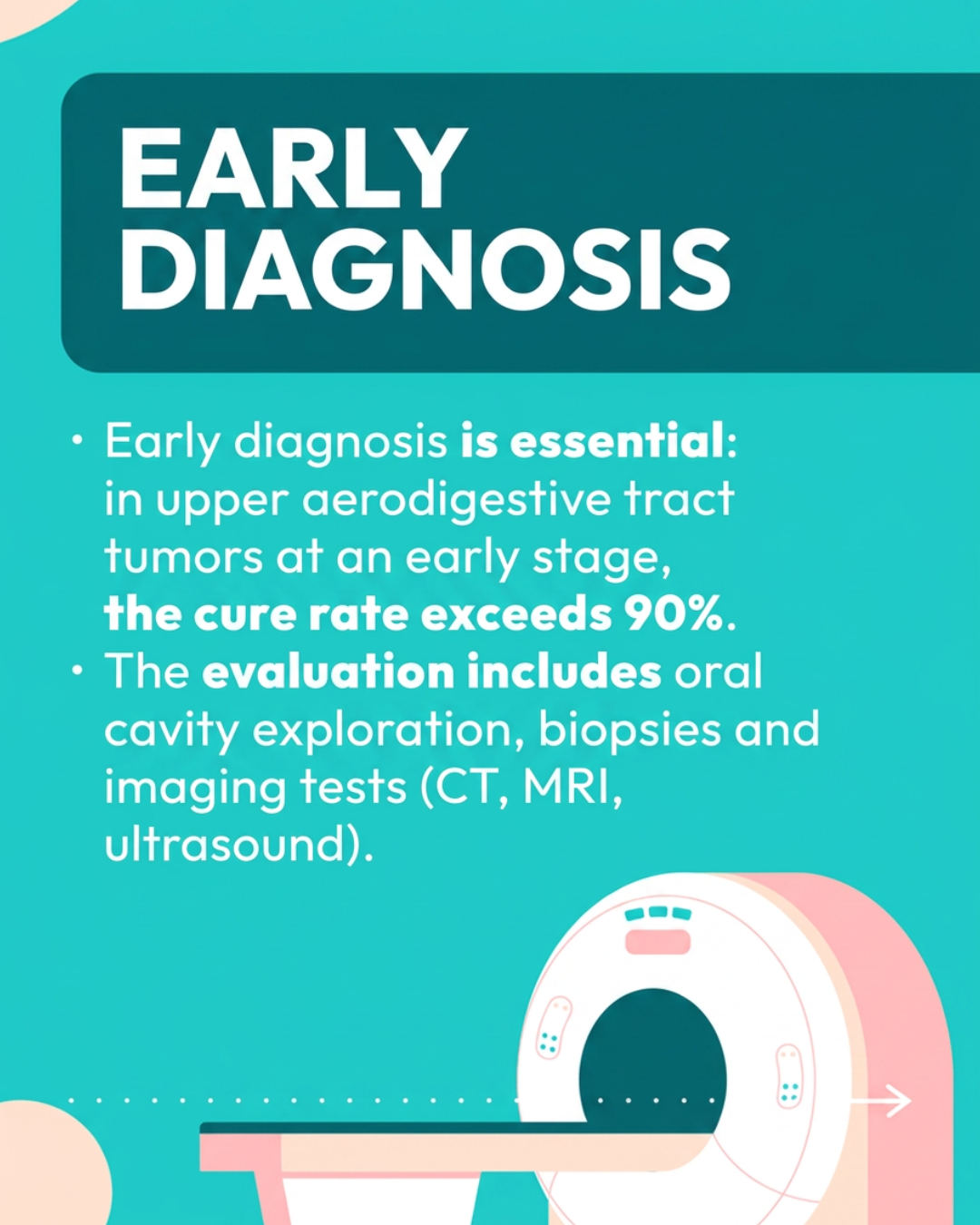
Accurate diagnosis and staging require a comprehensive assessment that includes:
- Detailed medical history
- Thorough physical examination
- Endoscopic and other instrumental investigations
- Advanced imaging studies, such as CT, MRI, and PET scans when indicated
These evaluations are essential for determining the extent of disease and developing an appropriate treatment plan.
Instrumental Examinations
Direct Fiberoptic Laryngoscopy
Direct fiberoptic laryngoscopy is an endoscopic examination that allows direct visualization of the nasal cavities, pharynx, and larynx. The procedure is performed by passing a flexible fiberoptic endoscope, a thin tube equipped with a light source and camera, through the nose to examine the upper aerodigestive tract at its various anatomical levels.
The examination is generally well tolerated, minimally invasive, and can be performed in an outpatient setting. It provides excellent visualization of the upper airway and is used to identify both direct and indirect signs of disease, including inflammatory changes, structural abnormalities, and suspicious lesions.
The outpatient clinics at the Candiolo Cancer Institute are also equipped with Narrow Band Imaging (NBI) technology, an advanced endoscopic imaging technique that enhances the visualization of superficial blood vessels and mucosal patterns. NBI improves the detection of areas suspicious for precancerous or early cancerous changes by highlighting abnormal submucosal vascular architecture, thereby supporting earlier and more accurate diagnosis.
Diagnostic Imaging Examinations
Neck Ultrasound
Neck ultrasound is a first-line, noninvasive imaging examination used to evaluate the lymph nodes and soft tissues of the neck. Since cervical lymph nodes are a common site of metastasis in head and neck cancers, ultrasound plays an important role in the initial assessment and staging of the disease.
When a lymph node appears suspicious, the examination can be complemented by an ultrasound-guided fine-needle aspiration biopsy (FNAB). During this procedure, a thin needle is used to collect cells from the lymph node, which are then analyzed by a pathologist through cytological examination.
Chest X-ray
Chest X-ray is a first-line, noninvasive imaging examination that provides an overview of the chest, with particular attention to the lungs.
This investigation is important both in the preoperative assessment of patients who may undergo surgery and in evaluating the possible presence of pulmonary metastases. It can also help detect a synchronous primary lung cancer, a relevant consideration given that tobacco use is a major risk factor for both head and neck cancers and lung cancer.
CT Scan, MRI, and PET-CT
Computed Tomography (CT), Magnetic Resonance Imaging (MRI), and Positron Emission Tomography combined with Computed Tomography (PET-CT) are advanced imaging modalities that play a central role in the evaluation of head and neck cancers.
These examinations provide detailed information about the location, size, and extent of the primary tumor, as well as its relationship to surrounding structures. They are also used to assess the presence of metastases in cervical lymph nodes and distant organs.
In many cases, these imaging studies are essential for accurate staging, treatment planning, and determining the most appropriate therapeutic approach, including surgery, radiotherapy, systemic therapy, or a combination of treatments.
Therapies
Once the diagnosis has been confirmed, the multidisciplinary team evaluates a range of factors to develop an individualized treatment plan. In addition to the type, location, and stage of the tumor, specialists consider the patient’s age, overall health, medical history, and personal circumstances.
The proposed treatment strategy is discussed in detail with the patient, including the expected benefits, potential risks, and available alternatives when different options offer comparable effectiveness.
Treatment recommendations depend on the characteristics and stage of the disease and may include one or more of the following approaches:
- Surgery, aimed at removing the primary tumor and, when necessary, affected lymph nodes in the neck.
- Radiotherapy, which uses high-energy radiation to destroy cancer cells and may be used as a primary treatment or in combination with surgery.
- Chemotherapy, which employs anticancer drugs to treat locally advanced or metastatic disease, often in combination with radiotherapy.
- Targeted therapies, which act on specific molecular pathways involved in tumor growth and progression.
- Immunotherapy, in selected cases, to enhance the body’s immune response against cancer cells.
Surgical Treatment
Chemotherapy
Targeted Therapy
Immunotherapy
Immunotherapy is a treatment approach that works by stimulating the body’s immune system to recognize and attack cancer cells. Unlike chemotherapy or targeted therapies, immunotherapy does not act directly on the tumor itself. Instead, it helps restore or enhance the immune response that cancer cells often suppress to evade detection.
Cancer cells can develop mechanisms that inhibit the activity of immune cells, effectively preventing the immune system from recognizing and eliminating them. Immunotherapy aims to overcome these mechanisms by blocking the signals that restrain immune activity, thereby reactivating the body’s natural defenses against cancer.
In head and neck cancers, immune checkpoint inhibitors have emerged as an important treatment option for selected patients with recurrent, advanced, or metastatic disease. These drugs can improve the immune system’s ability to identify and destroy cancer cells and may provide durable responses in some patients.
Immunotherapy may be used alone or in combination with other treatments, depending on the characteristics of the tumor and the patient’s overall condition. Ongoing research continues to expand its role in the management of head and neck cancers, and the results achieved to date suggest a promising future for this therapeutic approach.
Radiotion Therapy
Patient Support and Follow-up
At our institute, we provide continuous support before, during, and after treatment, ensuring that every patient is accompanied throughout their entire care journey. Our multidisciplinary team is committed to addressing not only the medical aspects of the disease but also the functional, emotional, and psychosocial needs that may arise during treatment and recovery.
Psychological Support
A cancer diagnosis affects not only physical health but also emotional and psychological well-being. The experience of cancer can have a profound impact on many aspects of a person’s life and may give rise to feelings such as anxiety, fear, uncertainty, anger, sadness, or depression.
At the Candiolo Cancer Institute, psychological care is an integral part of the treatment pathway. Alongside state-of-the-art medical therapies, patients have access to specialized psycho-oncological support designed to help them cope with the emotional challenges associated with diagnosis, treatment, and recovery.
Psycho-oncology services provide individualized support aimed at improving emotional well-being, strengthening coping strategies, and helping patients and their families navigate the practical and psychological consequences of cancer.
Patients may also have the opportunity to participate in support groups, where they can share experiences, concerns, and coping strategies with others who are facing, or have faced, similar challenges. These groups can provide valuable emotional support, reduce feelings of isolation, and foster a sense of community throughout the cancer journey.
Direct Access to the Care Team
To ensure timely assistance and provide prompt answers to concerns or questions that may arise during treatment and follow-up, the Candiolo Cancer Institute offers a dedicated support service for its patients.
From Monday to Friday, between 8:00 a.m. and 5:00 p.m., patients can contact the Oncology Day Hospital Secretariat at +39 011 993 3775 and request an urgent consultation.
When clinically appropriate, patients are promptly connected with a member of their specialist care team to receive guidance, clarification, and support. This service helps ensure continuity of care and provides a direct point of contact throughout the treatment and recovery process.
Supportive and Palliative Care
Cancer patients often face complex physical, emotional, and practical challenges that extend beyond the treatment of the disease itself. For this reason, comprehensive cancer care requires a multidisciplinary approach that addresses the full spectrum of patient needs throughout the course of illness and recovery.
At the Candiolo Cancer Institute, patients have access to a wide range of supportive and palliative care services tailored to their individual needs. These services are designed to improve quality of life, manage symptoms, and support physical and emotional well-being at every stage of care.
Depending on their clinical condition, patients may receive specialized support in areas such as:
- Nutritional counseling and support, to help maintain adequate nutrition and address difficulties with eating, swallowing, or weight loss.
- Physical therapy and rehabilitation, aimed at improving mobility, strength, functional recovery, and independence.
- Pain management, through individualized treatment plans focused on controlling cancer-related pain and treatment-related symptoms.
- Symptom management and supportive care, including the treatment of fatigue, swallowing difficulties, respiratory symptoms, and other conditions associated with cancer and its therapies.
Palliative care can be integrated at any stage of the disease and is provided alongside oncologic treatment when appropriate. Its goal is to optimize comfort, preserve quality of life, and ensure that patients receive comprehensive, person-centered care throughout their cancer journey.
Social Work Service
The Social Service Department of the Candiolo Institute conducts information and orientation interviews to patients and their families on how to access services in the area and how to obtain welfare and social security benefits provided by law (disability, benefits for aids and prostheses, work leave, etc.).
The service operates on Wednesdays and Fridays from 9 a.m. to 1 p.m. (phone: 011 9933059).
Follow-up
Following completion of treatment, patients enter the follow-up phase, a structured period of monitoring designed to assess recovery, evaluate treatment outcomes, and detect any signs of disease recurrence at the earliest possible stage.
Through regular clinical assessments and diagnostic investigations, follow-up aims to monitor:
- The short- and long-term effects of treatment
- The effectiveness of the therapies received
- Functional recovery, including speech, swallowing, breathing, and overall quality of life
- The possible development of recurrent or new disease
Follow-up visits also provide an important opportunity for patients to discuss concerns, report new symptoms, and receive ongoing guidance from their specialist team.
The follow-up schedule is coordinated by the treating physician, who determines the timing and type of evaluations based on the characteristics of the tumor, the treatments performed, and the patient’s clinical condition. During each visit, the patient’s overall health status is assessed and the results of any imaging or laboratory investigations are reviewed.
In general, follow-up continues for at least five years after treatment. Visits are scheduled more frequently during the first years, when the risk of recurrence is highest, and become progressively less frequent over time.
For patients with head and neck cancer, follow-up typically includes:
- Clinical examination with fiberoptic endoscopy (fibrolaryngoscopy):
- Every 3 months during the first 2 years after treatment
- Every 6 months during years 3 to 5
- Imaging studies, which may include CT of the neck and chest, MRI of the head and neck region, or PET-CT:
- Performed approximately 3 to 6 months after completion of treatment
- Repeated every 6 months during the first 2 years, when clinically indicated
- Subsequently performed every 6 to 12 months until the fifth year, according to individual risk factors and clinical findings
Additional investigations may be requested at any time if symptoms, physical examination findings, or imaging results raise suspicion of disease recurrence.
Regular follow-up is a fundamental component of comprehensive cancer care, allowing timely intervention when needed and supporting patients throughout their long-term recovery and survivorship journey.
Multi Disciplinary Team
Every cancer requires a multidisciplinary approach at all stages of disease management. At the Candiolo Cancer Institute, this is provided by a team of specialists from various clinical and surgical departments, known as the GIC, Interdisciplinary Care Group (or MDT). The GIC ensures that each patient is supported throughout the diagnostic and therapeutic process, including arranging and coordinating examinations and maintaining communication with the patient and their family.
For each patient, the GIC (MDT) defines and shares a personalized care pathway based not only on the type and stage of the tumor but also on the patient’s individual characteristics. The goal is to achieve the best possible outcomes both oncologically and functionally, while maintaining a high quality of life.
The Group also collaborates closely with the Institute’s researchers to provide patients with rapid access to the latest innovations in screening, diagnosis, and treatment.
Clinical Divisions
The head and neck cancer diagnostic and therapeutic pathway at the Candiolo Cancer Institute is based on a multidisciplinary approach that brings together specialists from several clinical divisions to ensure comprehensive and personalized patient care.
The multidisciplinary team may include experts from the following areas:
- Otolaryngology
- Reconstructive Plastic Surgery
- Anesthesia and Resuscitation
- Medical Oncology
- Nuclear Medicine
- Radiotherapy
- Radiodiagnostics
- Anatomical Pathology
Research and Innovation
At the Candiolo Cancer Institute, scientific research in the field of head and neck cancer is an integral part of patient care and continues to drive advances in precision medicine.
With the patient’s informed consent, small samples of tumor tissue can be collected and preserved in specialized research laboratories. These samples are used to generate tumor organoids, three-dimensional cellular models that closely reproduce the biological characteristics of the original tumor. Often referred to as “mini-tumors,” organoids provide researchers with a powerful tool for studying tumor behavior and evaluating responses to treatment in a laboratory setting.
These organoid models allow scientists to investigate how tumors develop, evolve, and respond to different therapeutic strategies, supporting the development of more personalized approaches to cancer care.
The head and neck cancer organoid biobank serves two primary research objectives:
- Evaluating currently available therapies, to better understand which treatments are most effective for specific tumor types and to investigate the mechanisms underlying treatment resistance.
- Testing novel therapeutic approaches, including new drugs and medications originally developed for other diseases, to assess their potential effectiveness against head and neck cancers.
A distinctive feature of this research program is the integration of genomic profiling through DNA sequencing, which enables researchers to identify the molecular and genetic characteristics of individual tumors. Combining organoid technology with genomic analysis provides valuable insights into tumor biology and may help identify new therapeutic targets.
Through this translational research approach, promising treatments can be evaluated in the laboratory before being considered for clinical application. Although research is ongoing and definitive conclusions have not yet been reached, the results obtained to date are highly encouraging and highlight the potential of organoid-based models to advance personalized cancer treatment in the future.
Why Choose Us
At the Candiolo Cancer Institute, each patient with head and neck cancer is managed according to highly specialized clinical standards, supported by the coordinated work of a dedicated Interdisciplinary Care Group (GIC).
This integrated model ensures that diagnosis, treatment planning, and follow-up are continuously shared among specialists from different disciplines, allowing for truly personalized and evidence-based care. The close collaboration between surgical, medical, and radiation oncology teams, together with diagnostic, rehabilitation, and supportive care services, enables rapid decision-making and comprehensive treatment strategies tailored to each patient’s needs.
By combining advanced technology, clinical expertise, and a multidisciplinary approach, the institute aims to deliver high-quality, patient-centered care throughout the entire disease pathway, from diagnosis to treatment, recovery, and long-term follow-up.
Clinical Experience and Tailored Approach
Thanks to the high volume of cases treated each year, the Candiolo Cancer Institute is recognized as a national reference center for the management of esophageal cancer.
This extensive clinical experience allows the institute to address even the most complex cases with a high level of expertise, combining advanced therapeutic strategies with continuous multidisciplinary collaboration.
Care is always personalized, with treatment plans tailored to the clinical characteristics of the disease as well as the individual medical and personal profile of each patient, ensuring a truly patient-centered approach throughout the entire care pathway.
Imaging Technologies and Advanced Diagnostics
The treatment pathway at the Candiolo Cancer Institute begins with a precise and timely diagnostic work-up, which is essential for defining an effective and individualized treatment strategy.
Patients have access to state-of-the-art imaging technologies that enable accurate evaluation of tumor location, size, and extent of disease spread. These tools are fundamental for staging and for planning the most appropriate therapeutic approach.
In addition, the institute provides advanced laboratory investigations, including molecular and genomic analyses. These examinations are crucial for characterizing the biological and genetic features of the tumor, helping clinicians to better understand disease behavior and to guide increasingly personalized treatment decisions.
Minimally Invasive Surgical Techniques and Multidisciplinarity
When clinically indicated, surgical treatment is performed using minimally invasive techniques, such as laparoscopic or thoracoscopic approaches. These methods reduce operative trauma, support faster postoperative recovery, and contribute to improved quality of life.
At the Candiolo Cancer Institute, every therapeutic decision is made within the framework of the GIC (Interdisciplinary Care Group), ensuring a coordinated, evidence-based, and fully integrated approach to patient management.
Clinical Research and Access to Trials
As an IRCCS, the Candiolo Cancer Institute integrates clinical care with a strong commitment to scientific research.
Patients may be evaluated for inclusion in active clinical trials, offering the opportunity to access innovative therapies that are not yet available in routine clinical practice. This close integration between research and patient care is a distinctive feature of the institute and translates into concrete therapeutic opportunities for selected patients.
The collaboration between clinical teams and research groups within the GIC (Interdisciplinary Care Group) ensures that potential trial eligibility is assessed in a structured and timely manner, aligning experimental options with each patient’s clinical profile and treatment pathway.
Care and Support Every Step of the Way
The Candiolo Cancer Institute’s Interdisciplinary Care Group (GIC) supports each patient throughout the entire care pathway, from diagnosis through treatment and into follow-up.
Care is designed to address not only the disease but also the person as a whole, with dedicated attention to nutritional support, psychological well-being, and reintegration into daily life. The organization of consultations, follow-up visits, and treatments is structured to ensure continuity of care, coordination among specialists, and a smooth patient experience.
Throughout the process, particular importance is given to the human dimension of care, with the aim of providing reassurance, stability, and comprehensive support at every stage of the journey.