Pathology
Prostate cancer is the most common cancer in men, accounting for approximately 19.8% of all male cancers in Italy. It develops when some cells in the prostate begin to grow uncontrollably and become cancerous.
The prostate is a gland found only in men. It is located below the bladder and in front of the rectum, and is about the size of a walnut. Its main function is to produce part of the fluid that makes up semen. The prostate is highly sensitive to male hormones, especially testosterone, which influence its growth and activity. As men get older, the prostate often becomes enlarged, which can cause urinary symptoms, although this is not necessarily a sign of cancer.
The Numbers in Italy
According to the AIRTUM registry (Italian Association of Cancer Registries), approximately 40,192 new cases of prostate cancer were diagnosed in Italy in 2024.
Although prostate cancer is very common, the outlook is generally positive. The 5-year survival rate is about 91%, making it one of the cancers with the highest survival rates, even though most patients are diagnosed later in life.
Types
In most cases, prostate cancer is an adenocarcinoma, meaning it develops from the cells that produce seminal fluid.
Less common types include ductal carcinoma and small-cell (neuroendocrine) carcinoma, which tend to grow and spread more quickly. Very rare forms, such as stromal tumors and sarcomas, arise from the supporting tissues of the prostate.
In rare cases, cancer that started elsewhere in the body can spread to the prostate, although this is uncommon.
Symptoms
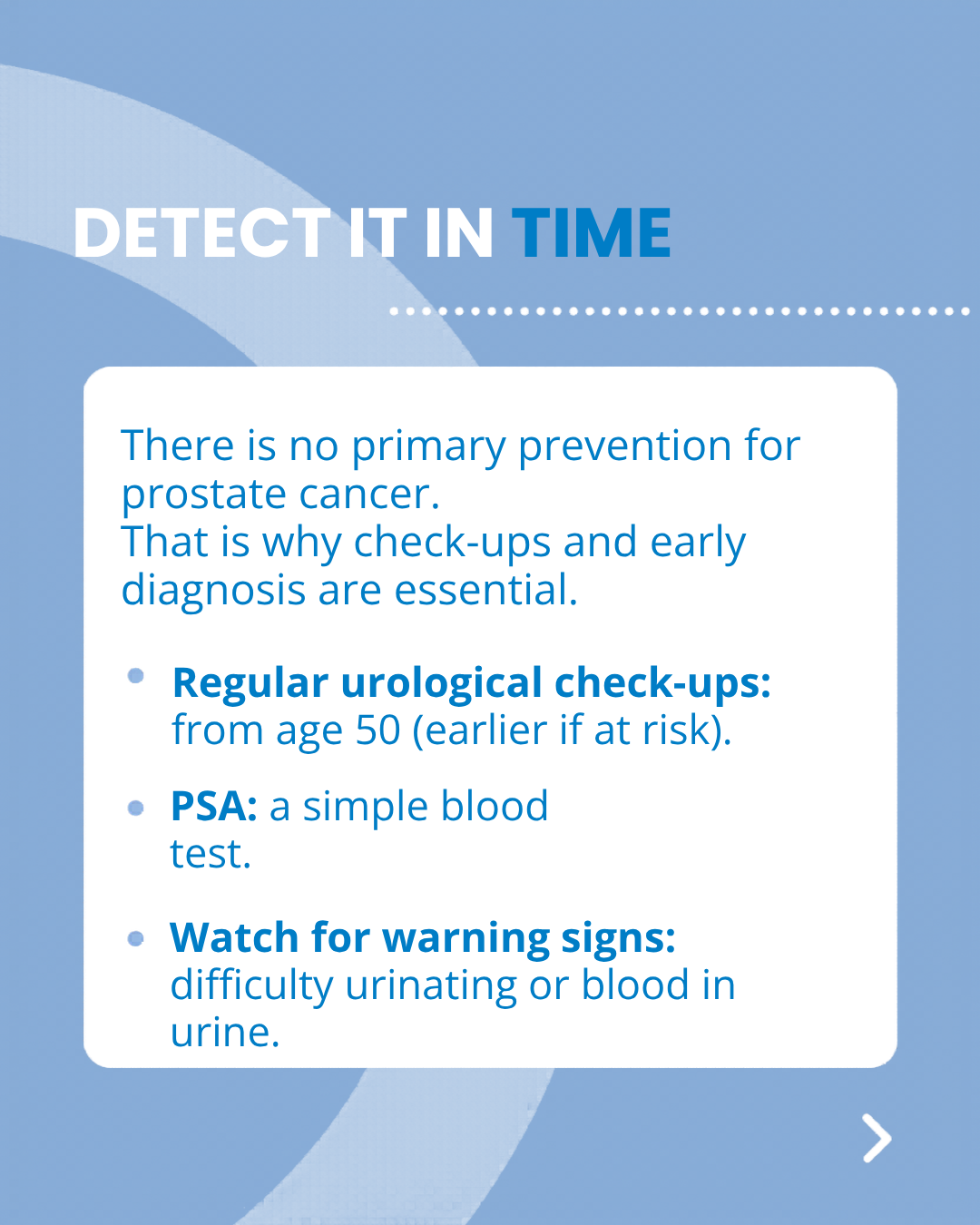
In its early stages, prostate cancer often causes no symptoms at all. It is frequently discovered during routine urological check-ups, which may include a digital rectal examination (DRE) and a PSA blood test. Sometimes, it is found by chance while investigating other health conditions.
As the tumor grows, symptoms may appear, including:
- Difficulty starting urination
- Needing to urinate more often, especially at night
- Pain or burning during urination
- Blood in the urine or semen
- A feeling that the bladder is not completely empty
- Difficulty with bowel movements if the cancer affects the rectum
In more advanced stages, prostate cancer may cause:
- Bone pain
- Weakness in the legs
- Symptoms related to pressure on the spinal cord caused by metastases
If any of these symptoms occur, it is important to consult your doctor or a urologist to determine whether further tests are needed.
Risk Factors
Several factors can increase the likelihood of developing prostate cancer:
- Advancing age: the risk increases significantly as men get older
- Family history: having a father, brother, or other close relative with prostate cancer increases the risk
- Ethnicity: prostate cancer is more common among men of African ancestry and in Scandinavian populations, and less common among Asian populations.
- Physical inactivity
- Exposure to air pollution
- A diet high in animal fats and red meat and low in fruits and vegetables
- High testosterone levels: testosterone does not directly cause prostate cancer, but it can help existing cancer cells grow and progress
- Exposure to ionizing radiation
Protective Factors
Some foods and dietary habits may help support prostate health and may be associated with a lower risk of prostate cancer, including:
- Soy products, which contain natural plant compounds called phytoestrogens
- Tomatoes, which are rich in lycopene
- Fruit, especially pomegranate
- Green tea
- Adequate intake of vitamin E
While no single food can prevent prostate cancer, following a healthy, balanced lifestyle may help reduce overall risk and support long-term health.
Diagnosis and Examinations
The diagnostic process for prostate cancer often begins with a visit to the general practitioner (GP). During the appointment, the doctor will assess the patient’s overall health, discuss any symptoms, and review their personal and family medical history.
If there are signs or risk factors that warrant further investigation, the GP may refer the patient to a urologist, a specialist in diseases of the urinary tract and male reproductive system.
The urologist can carry out a more detailed evaluation and, if necessary, recommend specific tests and examinations to determine whether prostate cancer is present and to assess its extent.
Digital Rectal Examination (DRE)
One of the first examinations used to assess the prostate is the digital rectal examination (DRE), which is usually performed by a urologist.
During the examination, the doctor inserts a gloved and lubricated finger into the rectum to feel the back surface of the prostate. This allows them to evaluate the gland’s size, shape, and consistency, and to check for any hard areas or nodules that may require further investigation.
Although some men may find the examination uncomfortable or embarrassing, it is quick, generally not painful, and usually takes only a few seconds.
The DRE remains an important part of prostate assessment because many prostate cancers develop in the outer part of the gland, where they can sometimes be detected through palpation before causing symptoms.
PSA Blood Test
PSA (Prostate-Specific Antigen) is a protein produced by the prostate gland. Its main role is to help keep semen in a liquid state. Small amounts of PSA are normally present in the bloodstream and can be measured with a simple blood test.
PSA levels tend to increase naturally with age, but they can also rise because of other prostate conditions, including:
- Prostatitis (inflammation of the prostate)
- Benign prostatic hyperplasia (BPH), an enlargement of the prostate that is not cancerous
- Prostate cancer
Because several conditions can affect PSA levels, the test cannot diagnose prostate cancer on its own. A higher-than-normal PSA level does not necessarily mean cancer is present, and some men with prostate cancer may still have PSA values within the normal range.
For this reason, doctors do not look only at a single PSA result. They also consider:
- How PSA levels change over time
- The patient’s age
- Medical history
- Results of other examinations, such as the digital rectal examination (DRE)
Monitoring PSA trends over time can provide valuable information. In some cases, a rapid increase in PSA levels may indicate the need for further investigation.
The PSA test is therefore an important tool for assessing prostate health, but its results must always be interpreted in the context of the patient’s overall clinical picture.
Multiparametric Magnetic Resonance Imaging (mpMRI)
Multiparametric Magnetic Resonance Imaging (mpMRI) is an advanced imaging test that uses magnetic fields and radio waves to produce highly detailed images of the prostate. It does not use ionizing radiation (X-rays).
This examination allows doctors to identify areas within the prostate that may be suspicious for cancer. It is called multiparametric because it evaluates the prostate using several different imaging techniques, providing a more complete and accurate assessment of the gland.
An mpMRI can help:
- Detect suspicious lesions within the prostate
- Distinguish between areas that are more likely to be benign or malignant
- Assess the size and location of a tumor
- Determine whether the cancer has spread beyond the prostate
- Guide the need for and planning of a prostate biopsy
- Support treatment planning if cancer is diagnosed
The examination is painless and usually lasts between 30 and 45 minutes. During the scan, the patient lies still on a table that moves into the MRI scanner while images are acquired.
Multiparametric MRI is considered one of the most important tools in the evaluation of prostate cancer, helping doctors make more informed diagnostic and treatment decisions.
The examination is performed in the Radiolodiagnostics Service.
Prostate Biopsy
If the results of the initial tests suggest the possibility of prostate cancer, for example if a suspicious area is detected during a digital rectal examination (DRE), PSA levels are elevated, or imaging tests such as multiparametric MRI identify suspicious lesions, the urologist may recommend a prostate biopsy.
A biopsy is the only test that can confirm the diagnosis of prostate cancer. It involves taking small samples of prostate tissue, which are then examined under a microscope by a pathologist.
The procedure is usually performed under ultrasound guidance, allowing the urologist to accurately identify the areas to be sampled. Tissue samples are collected using a thin needle that is inserted either:
- Through the rectum (transrectal biopsy)
- Through the skin between the scrotum and the anus (transperineal biopsy)
Several tissue samples are typically collected from different areas of the prostate to increase diagnostic accuracy.
Today, many centers use MRI-ultrasound fusion biopsy, an advanced technique that combines images from a previous multiparametric MRI with real-time ultrasound guidance. This allows the urologist to target suspicious areas more precisely, improving the likelihood of detecting clinically significant prostate cancer while reducing unnecessary sampling.
Prostate biopsy is usually performed as an outpatient procedure under local anesthesia. Although it may cause some discomfort, it is generally well tolerated.
After the procedure, mild and temporary side effects are common and may include:
- Blood in the urine
- Blood in the semen
- Minor rectal bleeding
- Mild discomfort in the biopsy area
These symptoms usually resolve on their own within a few days or weeks. Patients should contact their healthcare provider if they experience fever, severe pain, difficulty urinating, or heavy bleeding, as these may indicate complications that require medical attention.
Histological Examination
The tissue samples collected during the prostate biopsy are sent to the Pathology Laboratory, where they are examined under a microscope by a specialist called a pathologist.
The purpose of this examination is to determine whether cancer cells are present and, if so, to assess how aggressive the tumor is likely to be.
One of the most important pieces of information provided by the histological examination is the Gleason score, which measures how different the cancer cells appear compared with normal prostate cells. In general, the more abnormal the cells look, the more aggressive the cancer is likely to be.
The Gleason score is expressed as the sum of two numbers, representing the two most common patterns of cancer cells seen in the tissue sample.
In general:
- Gleason score 6 (3+3): low-grade cancer, usually the least aggressive form
- Gleason score 7 (3+4 or 4+3): intermediate-risk cancer, with a higher likelihood of growth and spread than Gleason 6 tumors
- Gleason scores 8 to 10 (4+4, 4+5, 5+4, or 5+5): high-grade cancers, considered more aggressive and more likely to spread
The results of the histological examination, together with PSA levels, imaging findings, and the patient’s overall health, help doctors determine the stage of the disease and select the most appropriate treatment strategy.
Clinical Staging
In cases of intermediate- or high-risk prostate cancer, additional tests are required to determine whether the disease has spread to the lymph nodes or other organs and, therefore, to establish the extent (or stage) of the tumor.
The tests most commonly used for this purpose are CT scans, bone scintigraphy, and PET scans. Based on the results of one or more of these examinations, the tumor is assigned a stage according to the TNM classification system, where T indicates the size and extent of the primary tumor, N indicates whether the lymph nodes are involved, and M indicates the presence of metastases.
Combining these three parameters with the Gleason score and PSA level allows the tumor to be classified into a low-, intermediate-, or high-risk category.
CT Scan (Computed Tomography)
A CT scan of the abdomen and pelvis is an imaging examination that uses X-rays to produce detailed three-dimensional images of structures inside the body.
During the examination, a contrast agent is injected to improve the visualization of the images produced by the scanner.
The examination is performed in the Radiology Department.
Bone Scintigraphy
Bone scintigraphy is an imaging test used to determine whether prostate cancer has spread to the bones.
The examination involves the administration of a small amount of a radiopharmaceutical, a substance that travels through the bloodstream and accumulates in bone tissue. A special camera then detects its distribution throughout the skeleton.
Bone scintigraphy provides detailed information about bone metabolism and remodeling, helping identify areas where bone activity is increased, which may indicate the presence of bone metastases.
The examination is particularly useful when there is a higher risk that the cancer may have spread beyond the prostate.
PET Scan (Positron Emission Tomography)
A PET scan is an imaging test that helps identify the presence and activity of a tumor by detecting areas of abnormal cellular metabolism.
In prostate cancer, a radiopharmaceutical (such as choline or PSMA) is injected into the bloodstream. This substance accumulates in tumor cells wherever they are located in the body.
The radiopharmaceutical emits signals that are detected by the scanner and converted into images.
PET scanning is performed in the Nuclear Medicine Department.
Therapy
Once the diagnosis has been confirmed, the specialists of the multidisciplinary team meet to define the most appropriate treatment plan for each patient. The proposed treatment is tailored according to the patient’s age, overall health, and characteristics of the disease.
At the end of this evaluation, the treatment considered most suitable is discussed with the patient. When more than one option is available, the advantages and disadvantages of each approach are explained to support a shared decision-making process.
For very early-stage cancers, an approach known as active surveillance may be recommended. This involves closely monitoring the disease without immediate treatment, through regular PSA testing (typically every 3 to 4 months) and periodic biopsies and/or MRI scans at predefined intervals.
In older patients with other significant health conditions and a low- or intermediate-risk tumor, a strategy based on clinical monitoring may be chosen, avoiding immediate invasive treatments.
In all other cases, treatment depends on the extent and aggressiveness of the tumor and may include:
- Surgery
- Radiation therapy
- Hormone therapy
These treatments may be used alone or in combination. In cases of advanced or metastatic disease, chemotherapy may also be considered.
For selected patients with particularly aggressive cancers that have not responded to standard treatments, participation in clinical trials evaluating experimental therapies may be an option. If considered appropriate by the multidisciplinary team, this possibility will be discussed with the patient and any decision will be made jointly.
Surgery
When the tumor is confined to the prostate, surgical removal of the prostate (radical prostatectomy) may be recommended.
At the Candiolo Cancer Institute, this procedure is performed using robot-assisted surgery. From a computerized console, the surgeon controls the robotic arms equipped with miniaturized surgical instruments and a 3D camera. The system provides high-definition images and allows extremely precise movements, helping the surgeon perform the procedure with great accuracy.
This minimally invasive approach offers several advantages compared with traditional open surgery. These include reduced bleeding, a lower risk of infection, smaller scars, a shorter hospital stay, and faster recovery. The precision of the technique may also help preserve, when possible, the nerves involved in urinary continence and erectile function.
In patients with more aggressive tumors, the surgeon may also remove nearby lymph nodes (lymphadenectomy) if there is a risk that they have been affected by the disease.
After the prostate has been removed, the surgeon reconnects the bladder to the urethra to restore the normal urinary pathway. A urinary catheter is temporarily inserted to allow healing and to drain urine into an external collection bag. The catheter is usually removed a few days after surgery.
When surgical removal of the prostate is not possible, for example because of advanced age, other medical conditions, or certain cases of tumor recurrence, minimally invasive treatments may be considered, including:
- High-Intensity Focused Ultrasound (HIFU), which uses focused ultrasound waves delivered through a robotic system to destroy the tumor while preserving the surrounding tissues.
- Cryotherapy, which uses extreme cold to selectively destroy cancer cells. The procedure involves inserting thin needles into the prostate to generate very low temperatures within the tumor.
Radiation Therapy
Radiation therapy is a localized, non-invasive treatment that uses high-energy radiation to damage and destroy cancer cells within the treatment area.
Treatment is usually delivered on an outpatient basis, either daily or, in selected cases, on alternate days, excluding weekends and public holidays. Each session generally lasts 10 to 20 minutes, while the overall duration of treatment depends on several factors, including the radiotherapy technique used and the stage of the disease. Treatment courses may range from a single session to several weeks.
Radiation therapy does not make the patient radioactive, and it is safe to remain in contact with other people throughout the treatment period.
The role of radiation therapy in prostate cancer varies according to the risk category and stage of the disease.
Radiation therapy may be recommended:
- As an alternative to surgery in patients with newly diagnosed prostate cancer, offering comparable effectiveness. In localized disease, stereotactic radiotherapy, a highly precise technique that delivers high doses of radiation in a small number of sessions, may be used in five or seven treatments on alternate days, with or without hormone therapy. In patients with higher-risk disease, a conventional course of radiotherapy (moderate hypofractionation) consisting of 26 sessions, with or without hormone therapy, may be proposed.
- After prostatectomy, either immediately after surgery when risk factors for local recurrence are present (postoperative radiotherapy) or later if PSA levels begin to rise (salvage radiotherapy).
- In the presence of lymph node or bone metastases, or to help control symptoms related to the disease.
Hormone Therapy
In prostate cancer treatment, hormone therapy (also called endocrine therapy) aims to reduce or block the effect of testosterone, the male hormone produced by the testes that can stimulate the growth of prostate cancer cells.
Hormone therapy may be used:
- Before surgery and/or radiotherapy to reduce the size of the prostate
- After surgery or radiotherapy to lower the risk of recurrence, or in combination with radiotherapy in intermediate- and high-risk tumors
- In advanced or metastatic disease to control tumor growth
There are two main types of anti-hormonal drugs:
- GnRH analogs, which reduce testosterone production. They are administered by intramuscular or subcutaneous injections every 1 to 3 months
- Antiandrogens, which block the action of testosterone on cancer cells. They are taken as daily tablets and are often combined with GnRH analogs
Hormone therapy can usually be given at home and may keep the disease under control for several years. Its effectiveness is monitored through regular PSA testing.
More recently, second-generation hormonal therapies have been introduced, offering improved control of the disease.
Chemotherapy
Chemotherapy works by interfering with the growth and division of cells, leading to the destruction of cells that multiply more rapidly than normal, a characteristic typical of cancer cells.
In prostate cancer, chemotherapy is generally used in patients with advanced disease that no longer responds to hormone therapy, with the aim of controlling symptoms and slowing disease progression.
It is administered in cycles, usually through an intravenous infusion in a day-hospital setting. Each cycle lasts a few days and is followed by a rest period of several weeks. The total number of cycles depends on the type of tumor and the patient’s response to treatment, which can vary significantly from person to person.
The most commonly used drug in this setting is Docetaxel.
Ongoing Support
At the Candiolo Cancer Institute, patients receive continuous support before, during, and after treatment.
Our multidisciplinary teams accompany each patient throughout the entire diagnostic, therapeutic, and recovery pathway, providing personalized care and support at every stage.
Management of Side Effects
All cancer treatments may cause side effects that can affect quality of life to varying degrees. At the Prostate Cancer Unit of the Candiolo Cancer Institute, patients are informed before starting treatment about the possible side effects associated with each therapeutic option, as well as the available strategies to manage them.
The physicians and nurses within the multidisciplinary team provide ongoing support to help patients manage any side effects that may occur during the course of treatment.
The most common side effects of prostate cancer therapies are erectile dysfunction and urinary incontinence.
To address erectile dysfunction, a rehabilitation program may be started, which can include specific medications and psychological support.
To improve urinary incontinence, patients can learn pelvic floor rehabilitation exercises with the assistance of a physiotherapist.
Psychological Support
Prostate cancer can also have a significant impact on a person’s emotional and psychological well-being. The disease often appears at a sensitive stage of life and may coincide with retirement or major life changes. In addition, side effects such as urinary incontinence and sexual dysfunction can affect self-esteem and personal relationships.
For this reason, at the Prostate Cancer Unit of the Candiolo Cancer Institute, patients who need it are offered qualified psychological support. This support helps patients cope with the diagnosis, treatment, and possible side effects of therapy, and assists them in adapting to changes in their social and working life.
Patients may also take part in psychological support groups, where they can share experiences and compare their journey with others facing or having faced similar situations.
Direct Line to Specialists
To ensure timely support and quick answers to patients’ concerns, a dedicated assistance service is available at the Candiolo Cancer Institute.
From Monday to Friday, between 8:00 a.m. and 5:00 p.m., patients can contact the secretariat of the oncology day hospital at +39 011.993.3775 to request an urgent consultation.
The patient will then be promptly put in contact with their treating specialist in order to receive clear information and immediate support.
Continuing Care and Palliative Care
A person with cancer often has complex needs that require multidisciplinary support, not only for the tumor itself but also for other related health issues.
At the Candiolo Cancer Institute, patients who need it have access to different specialists who provide comprehensive supportive care, including nutritional support, physiotherapy, pain management, and treatment of other associated conditions.
Genetic Counseling
Only 5–10% of prostate cancers are linked to a hereditary genetic mutation, such as changes in genes like HPC1, BRCA1, or BRCA2, which can be passed from parents to children.
People who carry these mutations have a higher risk of developing prostate cancer and may develop it at a younger age (before 50) and in a more aggressive form. For this reason, patients diagnosed with particularly aggressive prostate cancer, especially if they have a family history of prostate cancer diagnosed before the age of 60, are advised to seek genetic counseling.
At the Prostate Cancer Unit of the Candiolo Cancer Institute, an outpatient genetic counseling service is available. Here, a genetic specialist provides risk assessment, genetic testing when appropriate, and follow-up surveillance programs for individuals at increased genetic risk.
Social Working Services
The Social Service Department of the Candiolo Cancer Institute provides information and guidance to patients and their families on how to access local services and obtain legally provided welfare and social security benefits, such as disability support, assistance for aids and prostheses, and work leave arrangements, among others.
The service is available on Wednesdays and Fridays, from 9:00 a.m. to 1:00 p.m., and can be contacted at +39 011 9933059.
Follow-up
After completing treatment, the follow-up period begins. During this phase, a series of visits and tests are carried out to monitor the effects and success of the therapies, as well as the patient’s overall recovery.
Follow-up visits are also important to detect any possible recurrence early, allowing timely treatment if needed. They also provide an opportunity for ongoing communication with the treating specialist.
At the Prostate Cancer Unit of the Candiolo Cancer Institute, the oncologist organizes and schedules follow-up visits. During these appointments, the patient’s clinical condition is assessed, a digital rectal examination may be performed, and test results are reviewed.
The follow-up program for prostate cancer includes regular PSA testing. If PSA levels are suspicious, further investigations such as MRI and/or PET (Positron Emission Tomography) scans may be recommended.
Multi Disciplinary Team
Every cancer requires a multidisciplinary approach at all stages of disease management. At the Candiolo Cancer Institute, this is provided by a team of specialists from various clinical and surgical departments, known as the GIC, Interdisciplinary Care Group (or MDT). The GIC ensures that each patient is supported throughout the diagnostic and therapeutic process, including arranging and coordinating examinations and maintaining communication with the patient and their family.
For each patient, the GIC (MDT) defines and shares a personalized care pathway based not only on the type and stage of the tumor but also on the patient’s individual characteristics. The goal is to achieve the best possible outcomes both oncologically and functionally, while maintaining a high quality of life.
The Group also collaborates closely with the Institute’s researchers to provide patients with rapid access to the latest innovations in screening, diagnosis, and treatment.
Clinical Divisions
The diagnostic-therapeutic pathway for prostate cancer at the Candiolo Cancer Institute involves several clinical departments, including:
- Urological Surgery
- Medical Oncology
- Anesthesia and Resuscitation
- Nuclear Medicine
- Radiotherapy
- Radiodiagnostics
- Anatomical Pathology
Clinical Studies
Numerous clinical and experimental studies on prostate cancer are currently underway at the Candiolo Cancer Institute, as part of national and international research projects. These activities are coordinated by a Clinical Trial Unit, which brings together data managers, nurses, researchers, oncologists, engineers, radiologists, and surgeons specialized in this disease.
Access to experimental studies is limited to selected cases, when the multidisciplinary team considers that the patient may benefit and that standard treatments are not sufficient. In these situations, all available options are clearly explained to the patient, and treatment decisions are made through a shared decision-making process.
The main areas of research include:
- Research on predictive markers to better identify patients who may benefit from immunotherapy
- Development of advanced robotic surgery technologies, such as the 3D Image Guided Surgery / 3D@ROBOT SURGERY project, which uses high-definition 3D virtual models for preoperative planning and real-time surgical guidance
- Analysis of individual cancer cells to identify specific markers and DNA alterations useful for predicting disease progression and developing targeted therapies
- Immunotherapy for hormone-resistant disease, aimed at stimulating the immune system to recognize and attack cancer cells
Why Choose Us
At Candiolo IRCCS Institute, every prostate cancer patient is followed in a highly specialized manner, thanks to the synergistic work of a dedicated Interdisciplinary Care Group (ICG) .
Clinical Experience and Tailored Approach
Thanks to the large number of cancer cases treated each year, the Candiolo Cancer Institute is a national reference center for the care of this disease. This extensive experience allows us to manage even the most complex cases, always using a personalized approach, tailored to the clinical and individual profile of each patient.
Imaging Technologies and Advanced Diagnostics
Establishing a treatment plan always begins with an accurate and timely diagnosis. Patients have access to state-of-the-art imaging technologies, such as ultrasound, contrast-enhanced CT, MRI, and cholangio-RM, which are critical for accurately assessing the extent of the tumor.
Advanced laboratory tests, including molecular analyses, are also available to help define biological features of the disease and guide treatment choices.
Minimally Invasive Surgical Techniques and Multidisciplinarity
When appropriate, liver surgeries are performed using minimally invasive, laparoscopic or robotic techniques. These approaches involve the use of camera-equipped instruments introduced into the abdomen through small incisions, thus reducing surgical trauma. Benefits to the patient include shorter hospital stay times, faster recovery, and lower risk of complications compared with traditional open surgery.
Clinical Research and Access to Trials
As an IRCCS (Scientific Institute for Research, Hospitalization, and Healthcare), the Candiolo Cancer Institute combines clinical care with a strong focus on scientific research. Patients can be considered for participation in active clinical trials, offering access to innovative therapies not yet available in standard practice. This integration of care and research is a distinctive strength that translates into tangible benefits for patients.
Care and Support Every Step of the Way
The Interdisciplinary Care Group (GIC or MDT) supports the patient at every stage: from diagnosis, through treatment, to follow-up. Special attention is paid to nutritional support, psychological health and reintegration into daily life. The organization of checkups, examinations, and treatment is designed to ensure continuity, serenity, and a humane, caring approach to each patient’s needs.
