Description
The Department of Anatomical Pathology at IRCCS Candiolo is a highly specialized unit that plays a central role in cancer diagnosis. The department analyzes biological materials and tissue samples to confirm or rule out oncologic diagnoses and to identify the molecular and genetic characteristics of each disease—essential information for planning personalized treatment.
The multidisciplinary staff includes medical pathologists, biologists, radiologists, and laboratory technicians, who collaborate closely with surgeons, oncologists, hematologists, and radiation oncologists.
The department’s activities are organized into several specialized areas:
- Histopathology and Cytopathology
- Immunocytochemistry
- Cytogenetics
- Molecular Pathology (on tissue and liquid biopsy)
- Microscopic Diagnosis (histology and cytology)
Microscopic Diagnosis: Histology and Cytology
Histological and cytological diagnostics form the foundation of the department’s work:
- Examination of tissues and organs obtained via surgery, biopsy, or core needle biopsy.
- Analysis of cell samples from fine-needle aspiration, effusions, urine, sputum, bronchoaspirates, cerebrospinal fluid (CSF), and other specimens.
- Intraoperative diagnostics providing immediate feedback during surgical procedures.
Diagnostic counseling
The department provides in-depth diagnostic consultations for complex cancers, including:
- Breast
- Skin and soft tissue
- Head and neck
- Lung
- Gastrointestinal system
- Urogenital system
- Oncohematologic malignancies
The team also handles specialist cytology and with the diagnosis of cancers of unknown primitivity (CUP) – cancers whose organ of origin is unclear: using advanced techniques to identify the tissue of origin.
Biomarker Analysis
The Immunohistochemistry laboratory enables:
- Detection of tumor-associated molecular markers
- Assessment of prognosis and potential treatment responses
Genetic and Molecular Analysis
The department is also a reference center for Cytogenetics and Molecular Pathology, providing advanced genetic and molecular analyses, including:
- Detection of chromosomal alterations in leukemias, lymphomas, and solid tumors (e.g., using FISH).
- Identification of genetic mutations and gene fusions through Next-Generation Sequencing (NGS), critical for diagnosis, prognosis, and therapy selection.
- Evaluation of complex biomarkers via NGS, including microsatellite instability (MSI), tumor mutational burden (TMB), and homologous recombination deficiency (HRD).
- Detection of hereditary cancer syndromes (e.g., Lynch syndrome, familial polyposis, hereditary breast and ovarian cancer syndromes) in collaboration with Medical Genetics.
- Analysis of HPV viral DNA in relevant cancers (cervical, head and neck, etc.).
Contact
- We are on the First Floor
- Office hours: 8:00 a.m. – 3:30 p.m.
- Tel: +39 011 993 3472
- Fax: +39 011 993 3752
- Email: segreteria.ap@ircc.it
How to book
Find out all the ways you can access services through the National Health Service, privately and behind health funds and insurance coverage.
Équipe

Prof.
Caterina
Marchiò
Physician
Anatomical Pathology
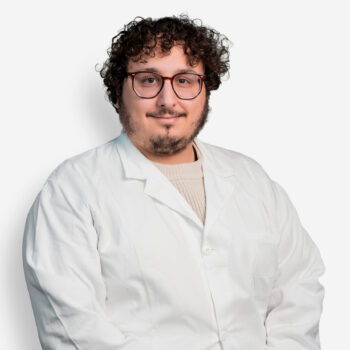
Dr.
Damiano
Carota
Physician
Anatomical Pathology
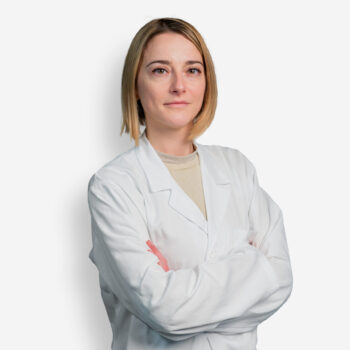
Dr.
Sara
Casella
Physician
Anatomical Pathology

Dr.
Laura
Casorzo
Biologist
Anatomical Pathology

Dr.
Denisa
Filip
Physician
Anatomical Pathology
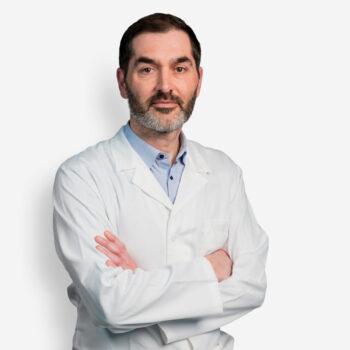
Dr.
Alessandro
Fornari
Physician
Anatomical Pathology

Dr.
Ivana
Sarotto
Biologist
Anatomical Pathology

Dr.
Leonardo
Tonelli
Physician
Anatomical Pathology

Dr.
Gianluca Robert
Witel
Physician
Anatomical Pathology

Dr.
Tiziana
Venesio
Biologist
Anatomical Pathology