New music therapy service for patients and families at hospice
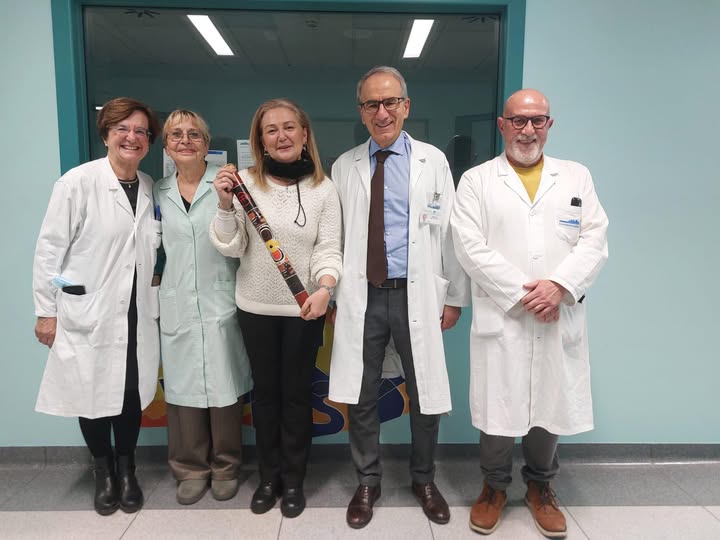
Since Dec. 12, a new music therapy service has been active at IRCCSHospice , designed to accompany patients on their care journey and offer a space for listening, relating and relief, even at times when words are no longer enough.
The course is led by music therapist Ada Maria Bellezza Tampa, a qualified professional who uses the universal language of music as a therapeutic tool to foster communication, emotional expression, and connection with self and others.
Through different modalities–from guided listening to musical improvisation, singing to simple sound presence–music therapy helps patients manage anxiety, grief, feelings of loneliness and emotional distress, while supporting the recovery of memories, identity and personal resources. Music can thus become a means of expressing deep experiences, shaping emotions and maintaining a relationship with the surrounding reality, even in the more advanced stages of the disease.
Music therapy is an internationally recognized discipline: the World Federation of Music Therapy defines its professional use as an intervention aimed at improving a person’s quality of life and physical, emotional, communicative and spiritual well-being. In the hospice setting, this approach takes on special value, because it allows for caring for the whole person, respecting their individual times, sensitivities and needs.
Scientific evidence shows that musical experience can positively affect pain perception, mood and anxiety by stimulating neurobiological responses related to emotional well-being. In addition, music often retains its evocative capacity even when other forms of communication are compromised, becoming a bridge to memory, emotions and sense of self.
The music therapy journey begins with an acquaintance meeting, during which the patient’s musical tastes, personal experiences and availability are explored. The sessions-individual or, when possible, group-take place in the inpatient room or in dedicated spaces, with a flexible and personalized approach. When they wish, family members can also be involved, facilitating moments of sharing and nonverbal communication.
The new service complements the Institute’s care pathways, aiming to improve the quality of life for patients and their families by offering support that complements clinical care and enhances the human and relational dimensions of care.
As psychiatrist and music therapist Rolando O. Benenzon, “music can accompany the human being until the last minute of his or her life”-a principle that finds concrete application today in IRCCS’s commitment to increasingly person-centered care beyond illness.